

/
-
History Coexists with Nature—
Zhongzheng-Wenshan LineZhongzheng District is the political and economic hub, home to historic landmarks such as the Presidential Office and the headquarters of the Bank of Taiwan. Wenshan District, surrounded by mountains on three sides, is lush with greenery and filled with the refreshing scent of tea.
-
History Coexists with Nature—
Zhongzheng-Wenshan LineZhongzheng District is the political and economic hub, home to historic landmarks such as the Presidential Office and the headquarters of the Bank of Taiwan. Wenshan District, surrounded by mountains on three sides, is lush with greenery and filled with the refreshing scent of tea.
-
History Coexists with Nature—
Zhongzheng-Wenshan LineZhongzheng District is the political and economic hub, home to historic landmarks such as the Presidential Office and the headquarters of the Bank of Taiwan. Wenshan District, surrounded by mountains on three sides, is lush with greenery and filled with the refreshing scent of tea.
-
History Coexists with Nature—
Zhongzheng-Wenshan LineZhongzheng District is the political and economic hub, home to historic landmarks such as the Presidential Office and the headquarters of the Bank of Taiwan. Wenshan District, surrounded by mountains on three sides, is lush with greenery and filled with the refreshing scent of tea.
-
History Coexists with Nature—
Zhongzheng-Wenshan LineZhongzheng District is the political and economic hub, home to historic landmarks such as the Presidential Office and the headquarters of the Bank of Taiwan. Wenshan District, surrounded by mountains on three sides, is lush with greenery and filled with the refreshing scent of tea.
-
History Coexists with Nature—
Zhongzheng-Wenshan LineZhongzheng District is the political and economic hub, home to historic landmarks such as the Presidential Office and the headquarters of the Bank of Taiwan. Wenshan District, surrounded by mountains on three sides, is lush with greenery and filled with the refreshing scent of tea.
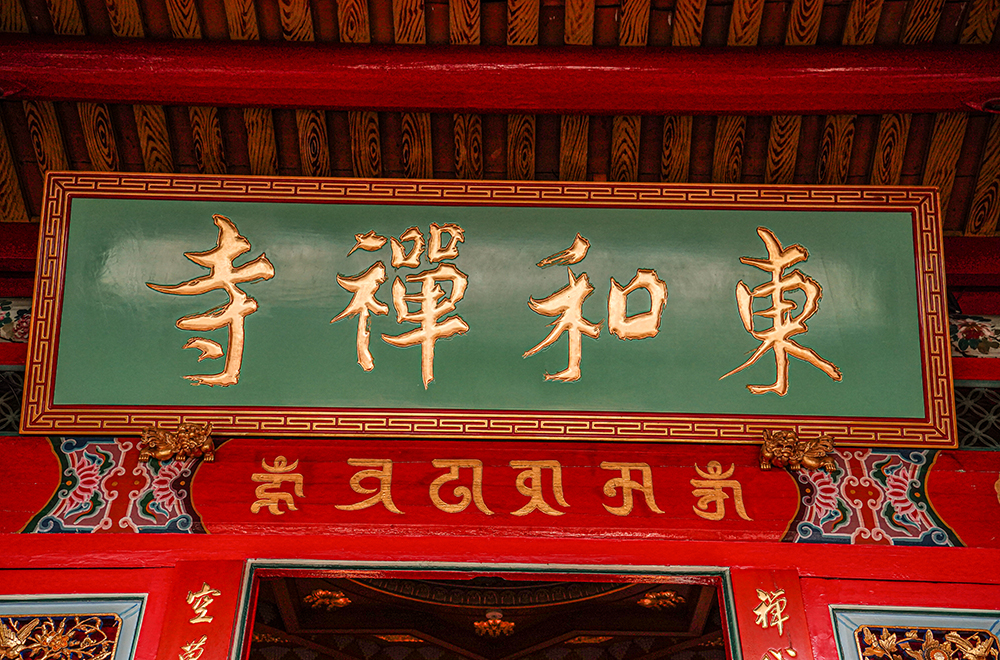
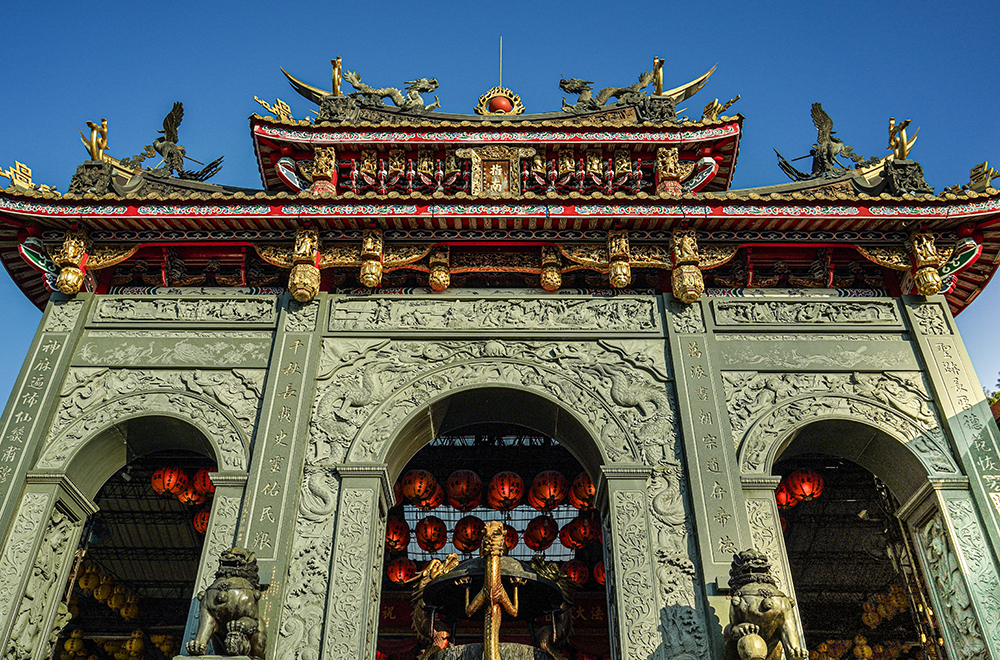
Dongher Temple
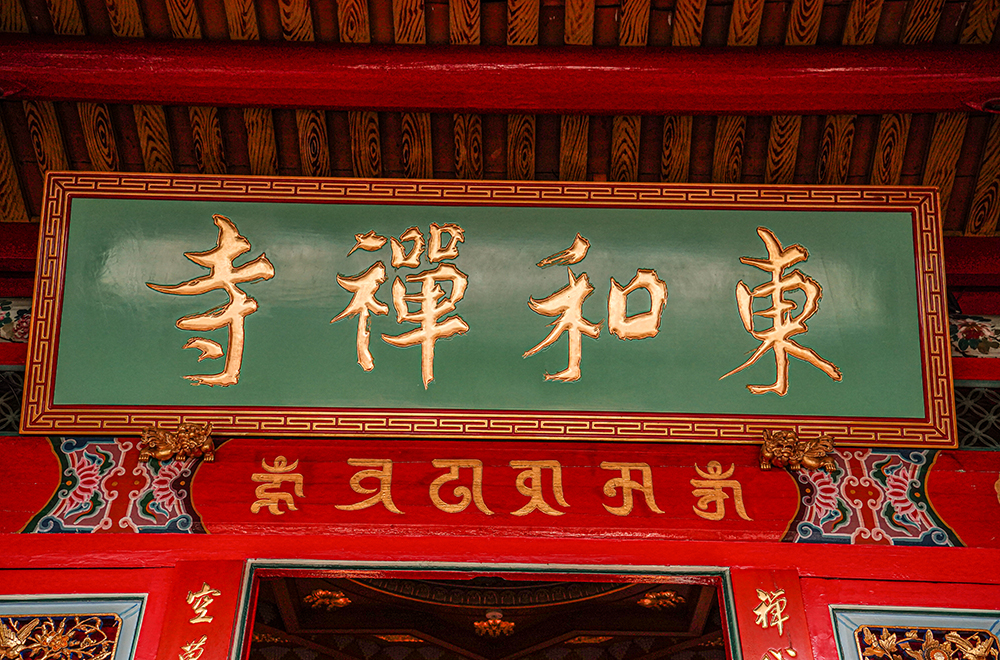 Once the Sōtō Zhen Taipei Branch under Japanese rule, it was later renamed Dongher Temple.
Originally established during the Japanese colonial period as the “Taiwan Branch of the Sōtō School Headquarters,” Dongher Temple preserves deep cultural and historical significance. One of its key structures, the Guanyin Meditation Hall, was specifically built for Taiwanese worshippers. Architecturally, it blends two traditions: a symmetrical Minnan-style sanheyuan layout integrated within a Japanese Buddhist temple complex—an unusual but meaningful fusion.
Though much has been lost to time and reconstruction, the temple still upholds the teachings of Sōtō Zen Buddhism passed down from Japan. Its most iconic structure is the bell tower, built in the architectural style of Japan’s Momoyama and Edo periods. Resembling a city gate, this bell tower is now a designated historic monument of Taipei.
Tucked away in a bustling urban setting, Dongher Temple offers a tranquil retreat. The soft murmur of chanting sometimes mingles with the chatter of students passing by. Under warm lantern light, the narrow path between the bell tower and the temple radiates calm—a reminder of monastic practice quietly unfolding amid the noise of everyday city life.
Though much has been lost to time and reconstruction, the temple still upholds the teachings of Sōtō Zen Buddhism passed down from Japan. Its most iconic structure is the bell tower, built in the architectural style of Japan’s Momoyama and Edo periods. Resembling a city gate, this bell tower is now a designated historic monument of Taipei.
Tucked away in a bustling urban setting, Dongher Temple offers a tranquil retreat. The soft murmur of chanting sometimes mingles with the chatter of students passing by. Under warm lantern light, the narrow path between the bell tower and the temple radiates calm—a reminder of monastic practice quietly unfolding amid the noise of everyday city life.
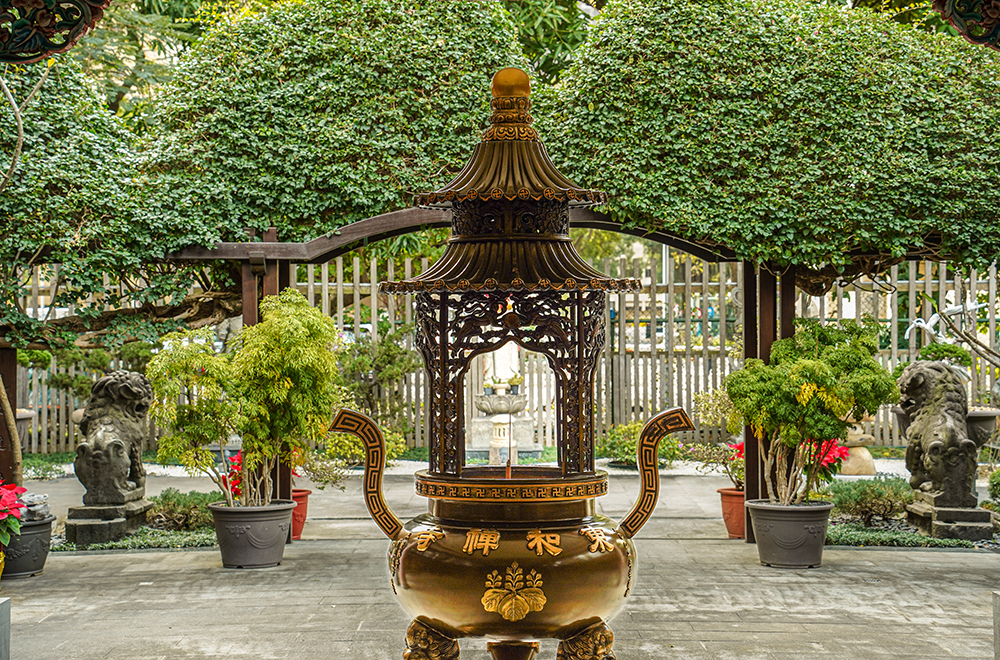 The temple courtyard features an elegant garden-style layout.
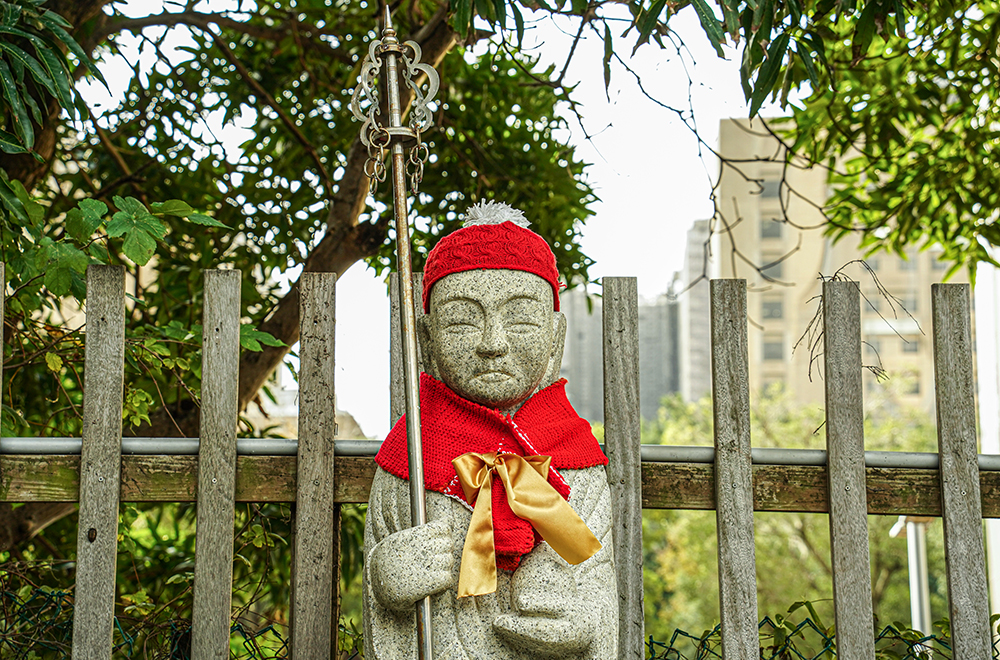 In front of the Zen hall stands a stone statue of Kṣitigarbha Bodhisattva, offering protection and peace to devotees.
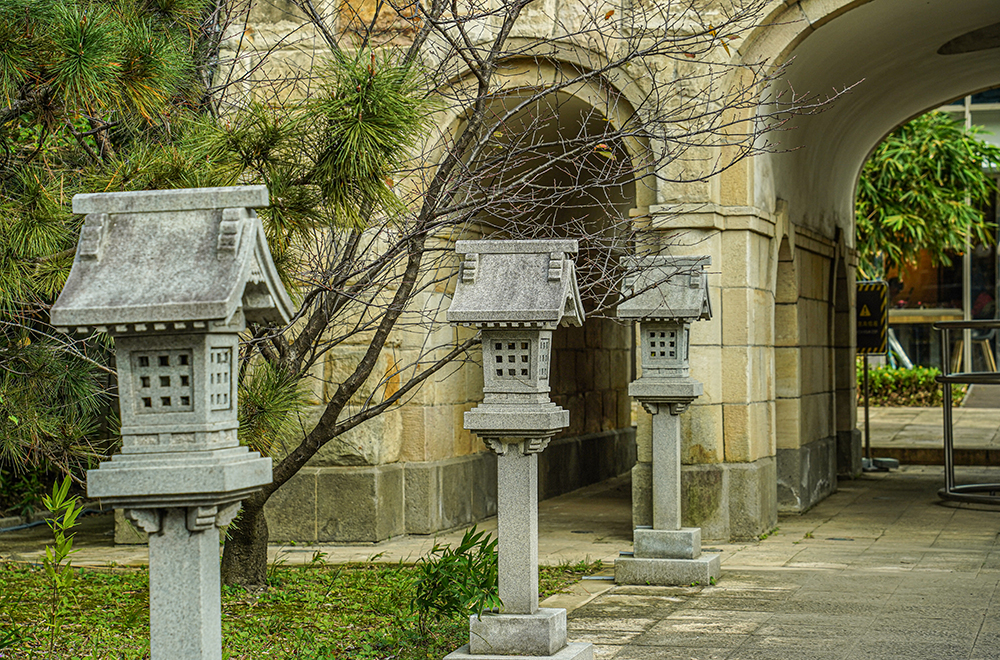 The elegant stone lantern before the bell tower evokes a sense of being in a different land.
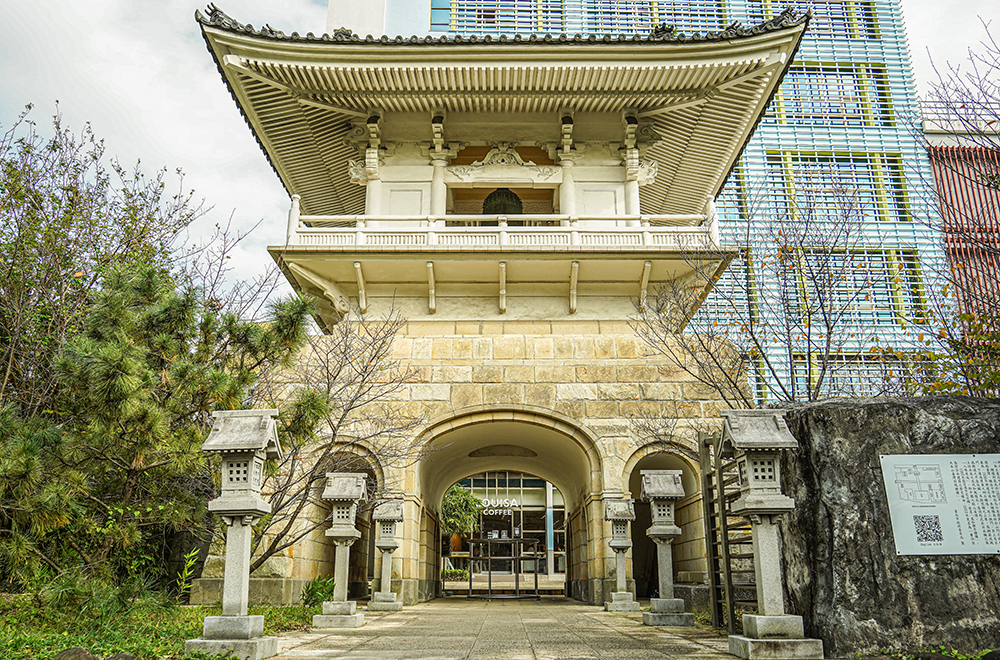 The former bell tower of the Sōtō Zhen Taipei Branch is now a designated historic monument of Taipei City.
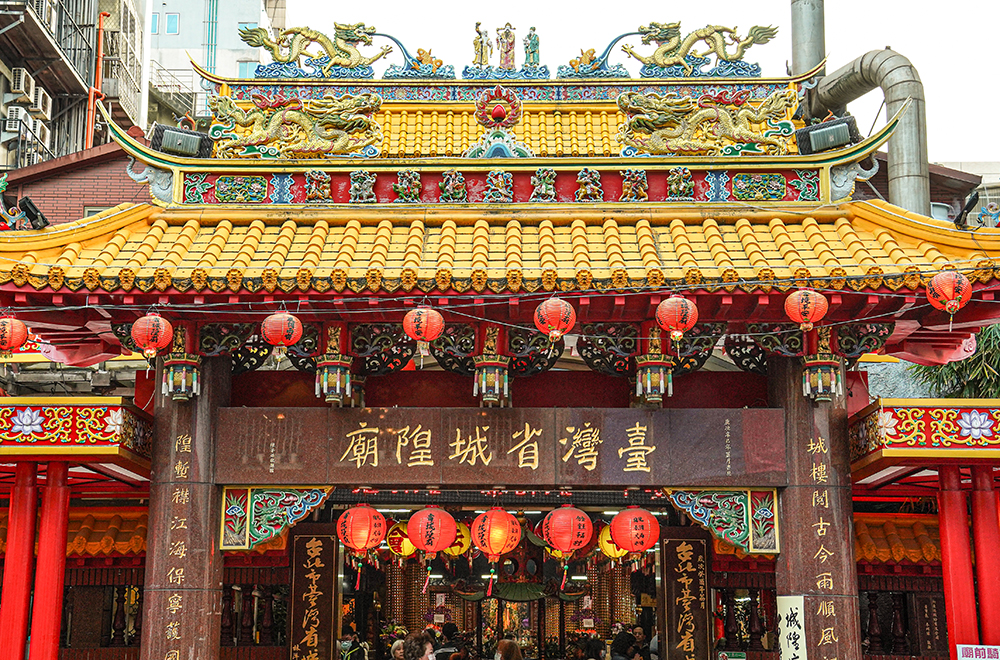
City God Temple of Taipei City
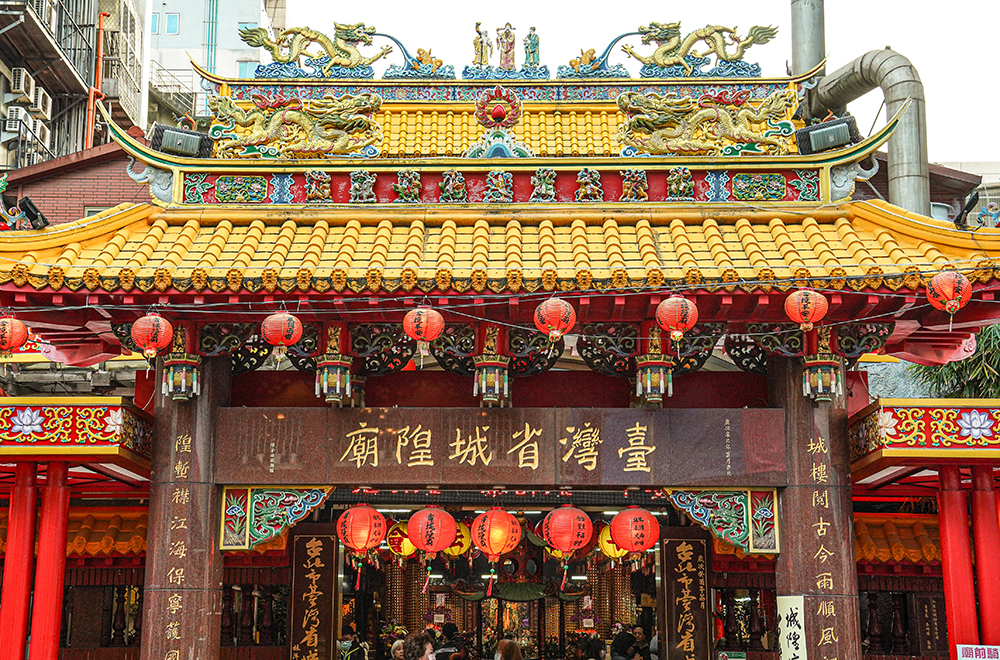 Formerly the official City God Temple of Taipei City, it was restored at its current location after Taiwan’s retrocession, resuming public seasonal rites.
Founded during the Guangxu era of the Qing Dynasty, the City God Temple of Taipei City has a history spanning over 140 years. Located in the heart of Taipei’s historic Zhongzheng District (formerly the core of the old city), the temple enshrines the “Divinely Appointed and Enlightened King Chenghuang,” the guardian deity of all Taiwan. It also honors deities from the Confucian, Buddhist, and Taoist traditions, protecting the nation and preserving social stability.
From the days of Qing-era Taipei to the modern city it is today, and from the former Chengzhong area to present-day Zhongzheng District, the temple has remained a steadfast spiritual presence through shifting administrative eras. It stands as a symbol of Taipei’s history as Taiwan’s former provincial capital and reflects the city's developmental journey.
City God Temple of Taipei City is also a leading advocate of eco-friendly worship in Taipei. It promotes centralized burning of joss paper, encourages “offering rice instead of gold,” and hosts monthly peace and protection ceremonies. It also plays a major role in Taipei’s annual Ghost Festival (Zhongyuan Pudu), praying for societal harmony and public well-being.
From the days of Qing-era Taipei to the modern city it is today, and from the former Chengzhong area to present-day Zhongzheng District, the temple has remained a steadfast spiritual presence through shifting administrative eras. It stands as a symbol of Taipei’s history as Taiwan’s former provincial capital and reflects the city's developmental journey.
City God Temple of Taipei City is also a leading advocate of eco-friendly worship in Taipei. It promotes centralized burning of joss paper, encourages “offering rice instead of gold,” and hosts monthly peace and protection ceremonies. It also plays a major role in Taipei’s annual Ghost Festival (Zhongyuan Pudu), praying for societal harmony and public well-being.
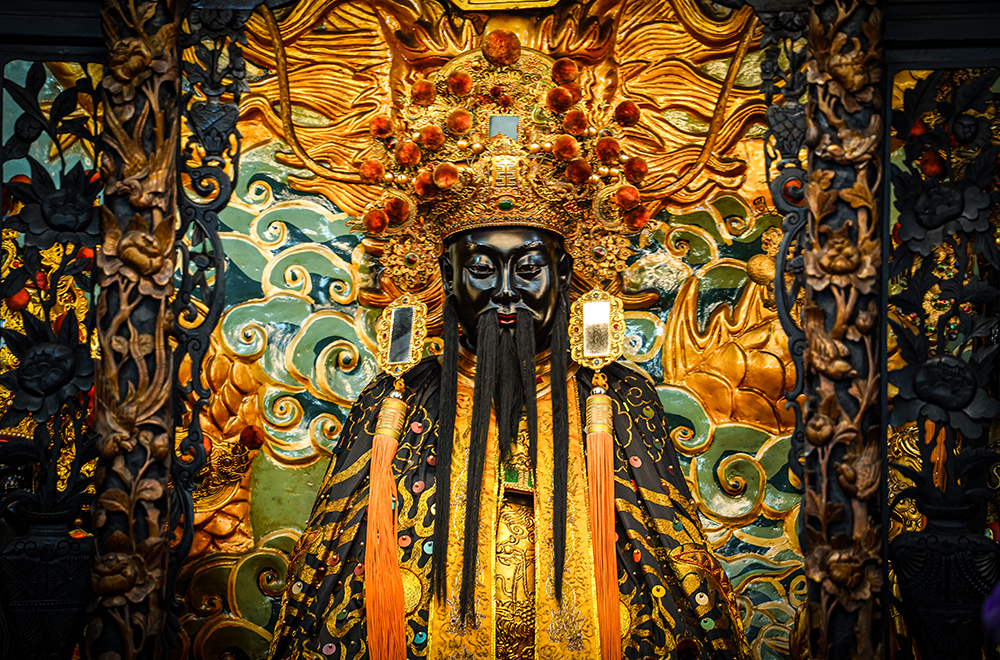 The temple enshrines the “Divinely Appointed and Enlightened City God,” the guardian deity of all Taiwan.
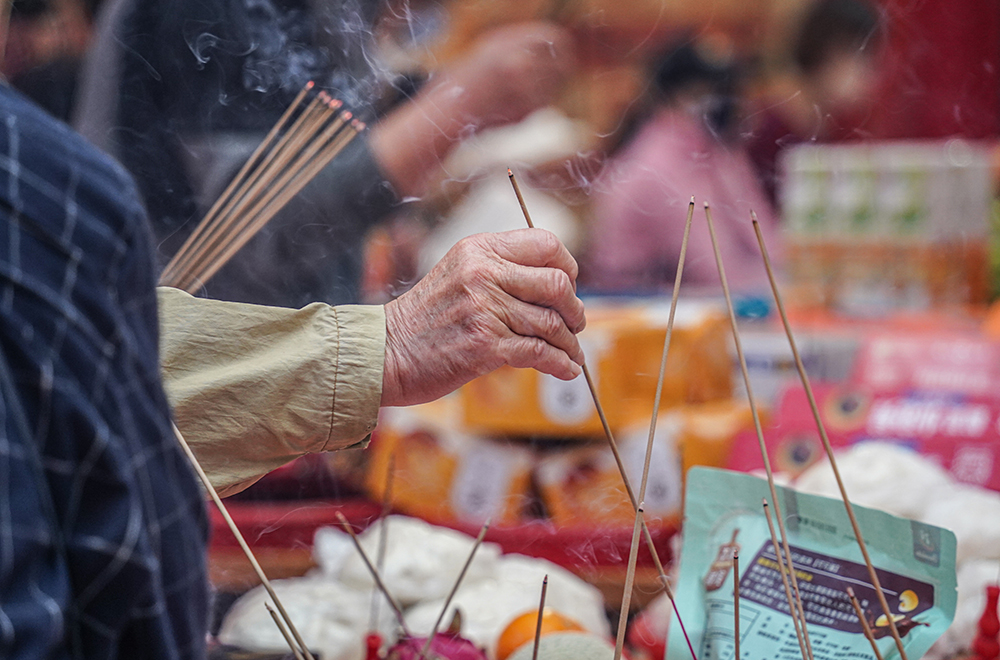 Monthly ceremonies for peace and blessings draw continuous streams of worshippers, with incense wafting year-round.
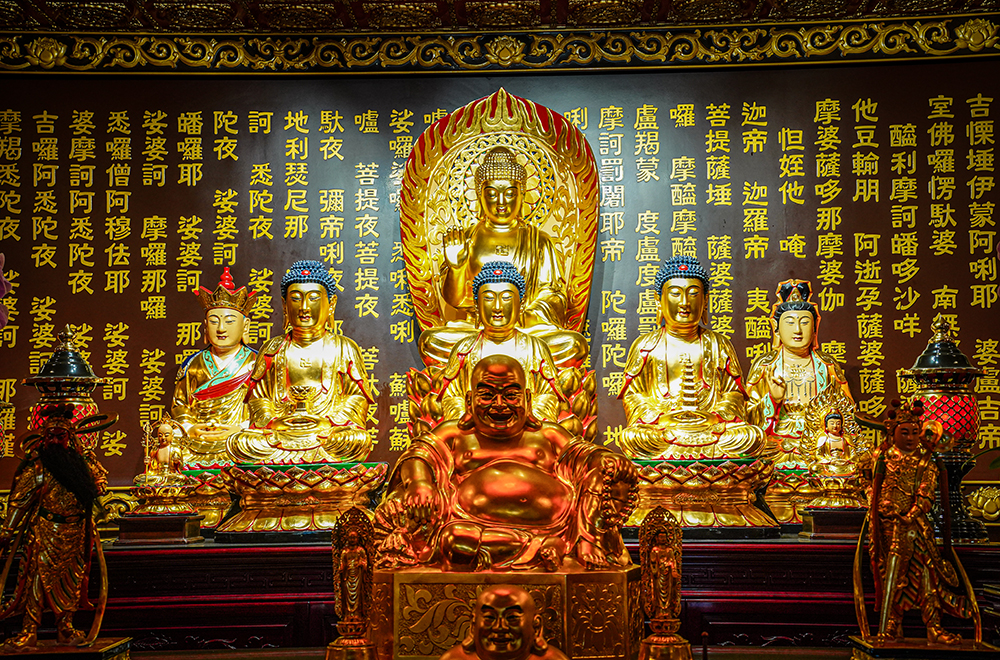 The second-floor Mahavira Hall enshrines the Three Jewels Buddhas along with celestial guardians and Bodhisattvas.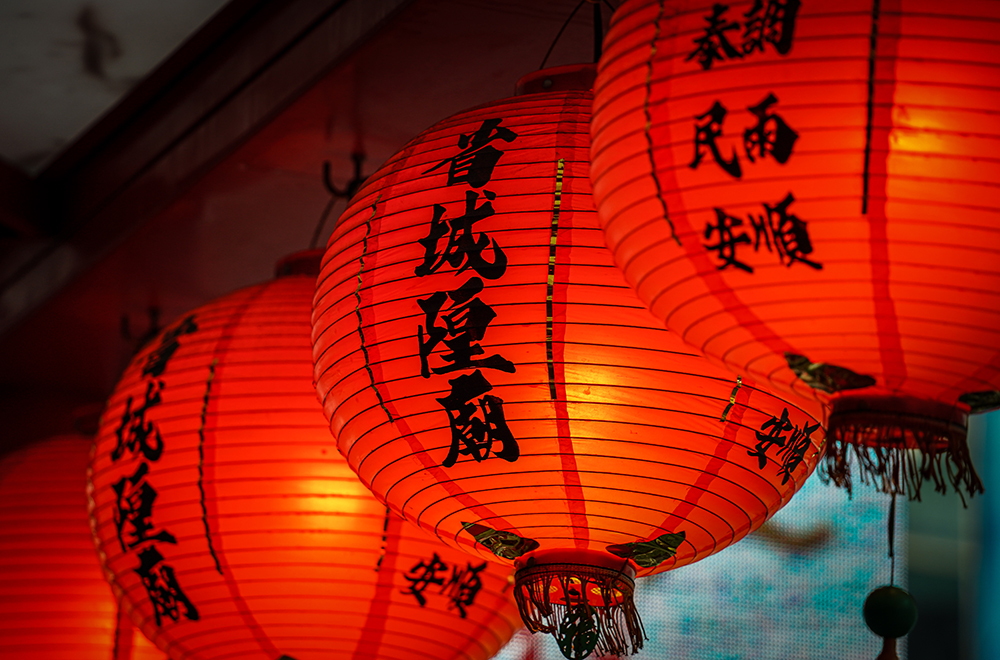
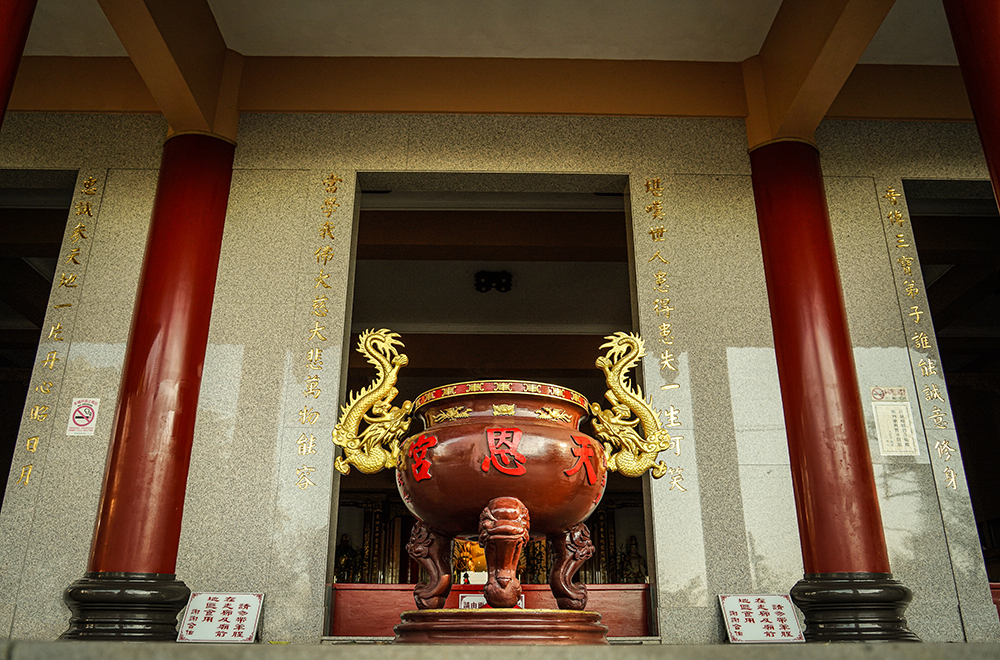
Tian’en Temple
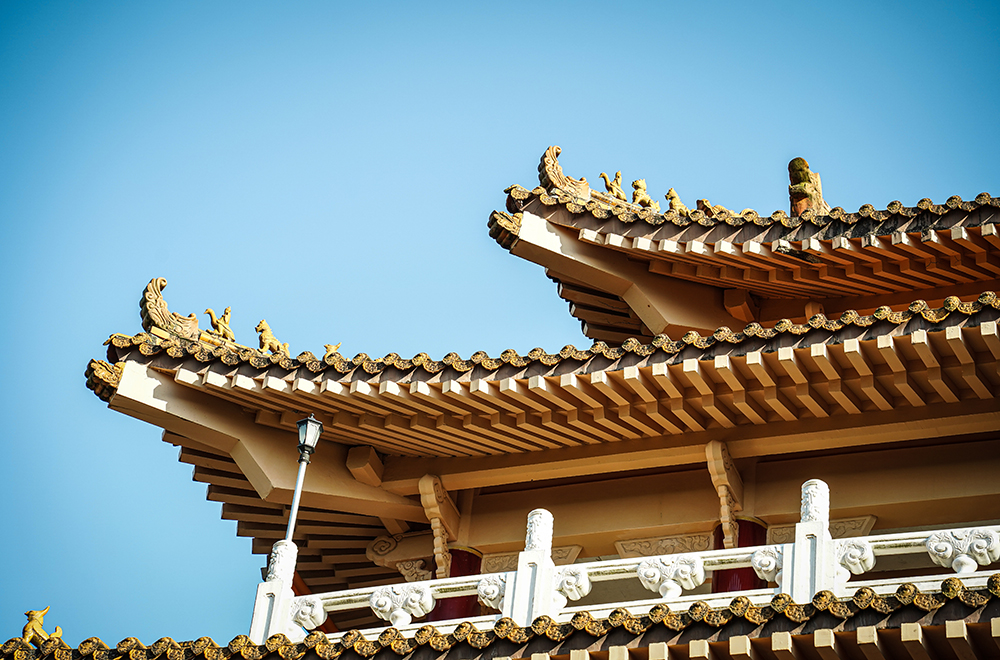
Located in Wenshan District, Tian’en Temple serves as a religious center for the I-Kuan Tao. The main hall on the first floor enshrines the ever-smiling Maitreya Buddha in the center, flanked by Guanyin Bodhisattva and Holy Emperor Guan. Though simply adorned, the tall main hall, with its dragon columns and clean design, exudes reverence and solemnity.
On weekends, hikers and gondola riders often make a special stop to offer flowers and fruit, expressing gratitude for blessings and praying for their families’ well-being. During these times, birthday rites and Dharma assemblies are also held, reflecting the traditional values of honoring the heavens and respecting the Taoist lineage.
The temple’s historical steles and plaques record the support and contributions of notable local figures. Tian’en Temple also organizes Taoist lectures and public service events to help people better understand the essence of Taoist teachings. It stands as a spiritual stronghold in the city, connecting ancient beliefs with modern life.
On weekends, hikers and gondola riders often make a special stop to offer flowers and fruit, expressing gratitude for blessings and praying for their families’ well-being. During these times, birthday rites and Dharma assemblies are also held, reflecting the traditional values of honoring the heavens and respecting the Taoist lineage.
The temple’s historical steles and plaques record the support and contributions of notable local figures. Tian’en Temple also organizes Taoist lectures and public service events to help people better understand the essence of Taoist teachings. It stands as a spiritual stronghold in the city, connecting ancient beliefs with modern life.
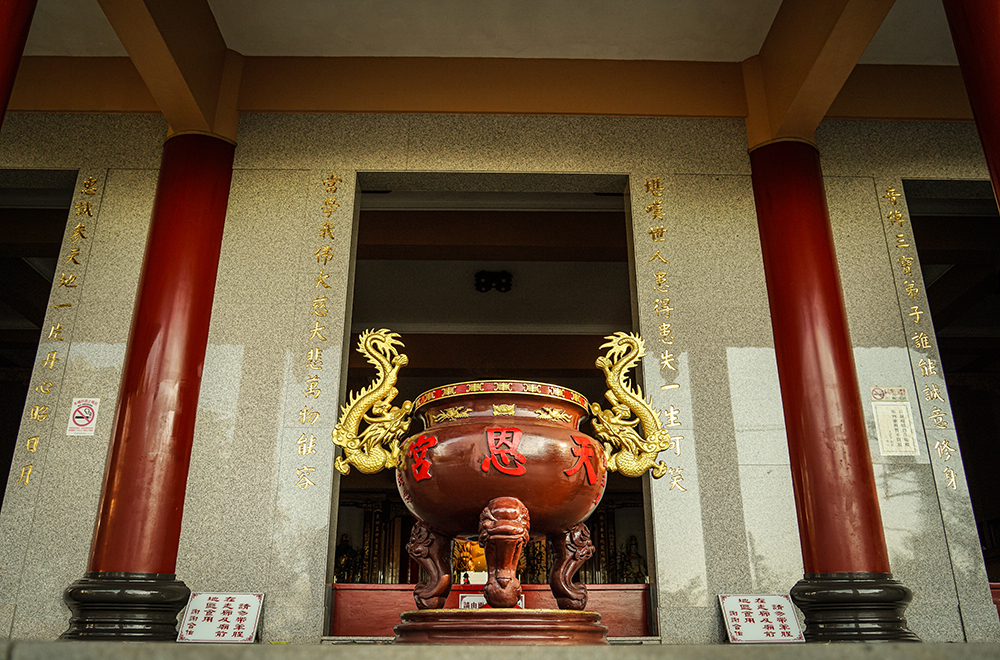 Tian’en Temple serves as the religious affairs center for the I-Kuan Tao’s Fa Yi Tian’en branch.
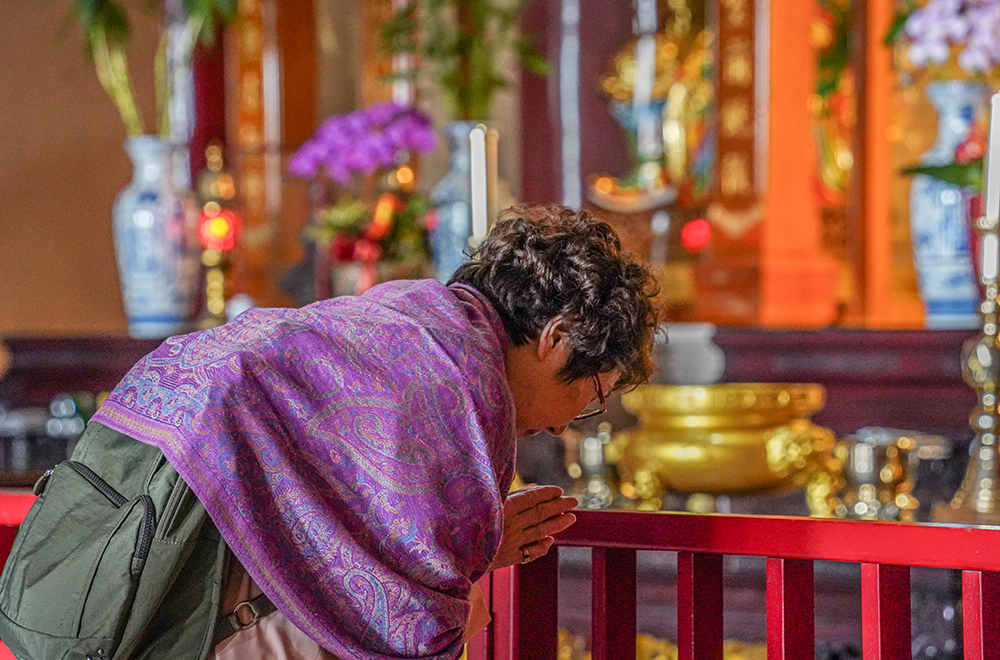 Located in Maokong, Tian’en Temple draws hikers for reverent worship.
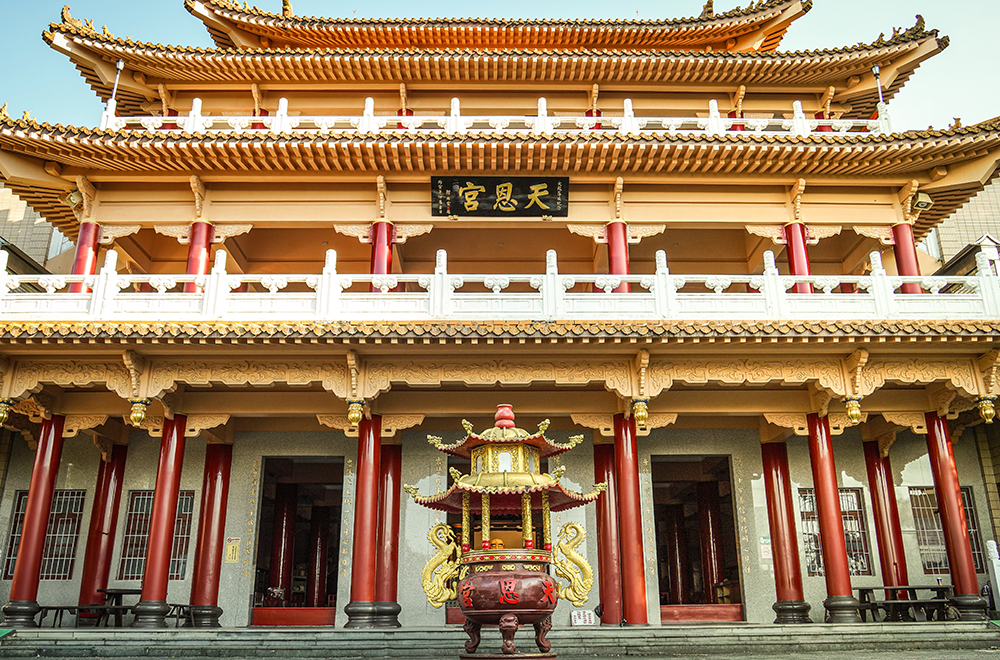 The main hall is a solemn and majestic sanctuary.
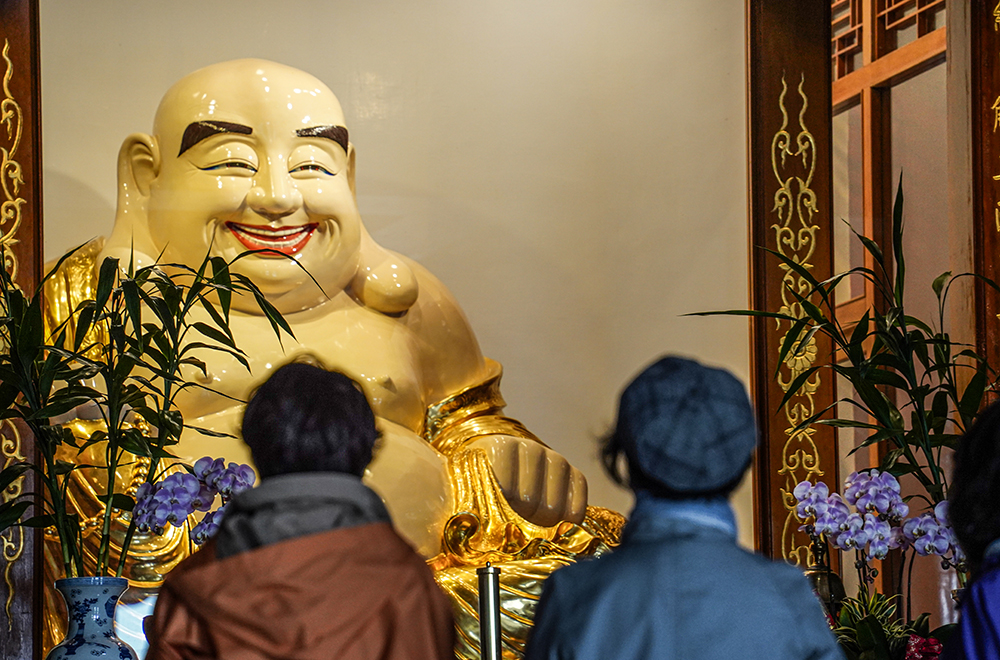 The main hall of Tian’en Temple enshrines Maitreya Buddha.
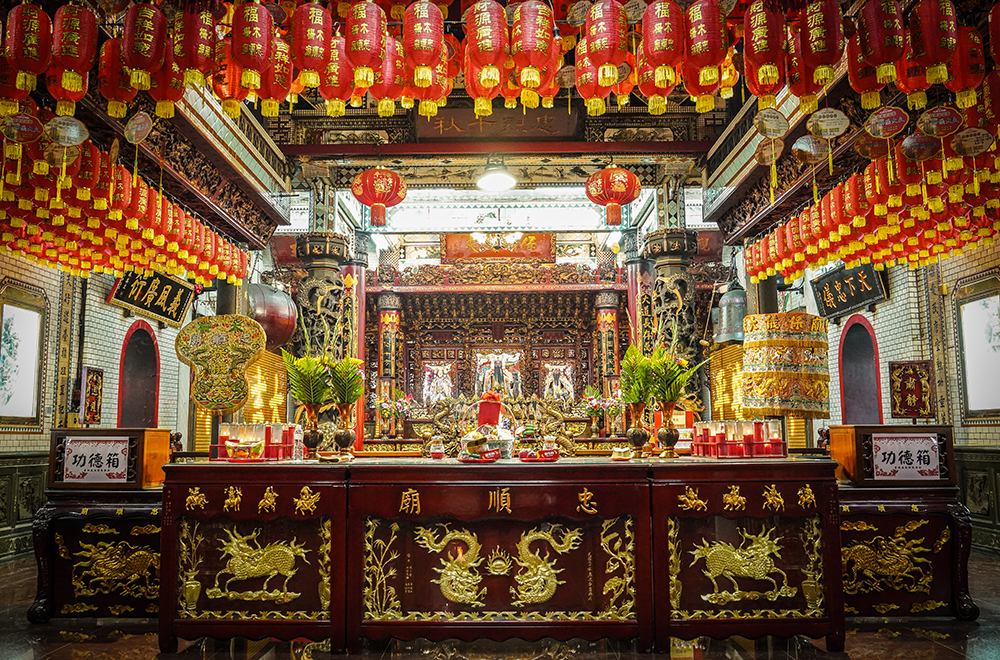
Muzha Zhongshun Temple
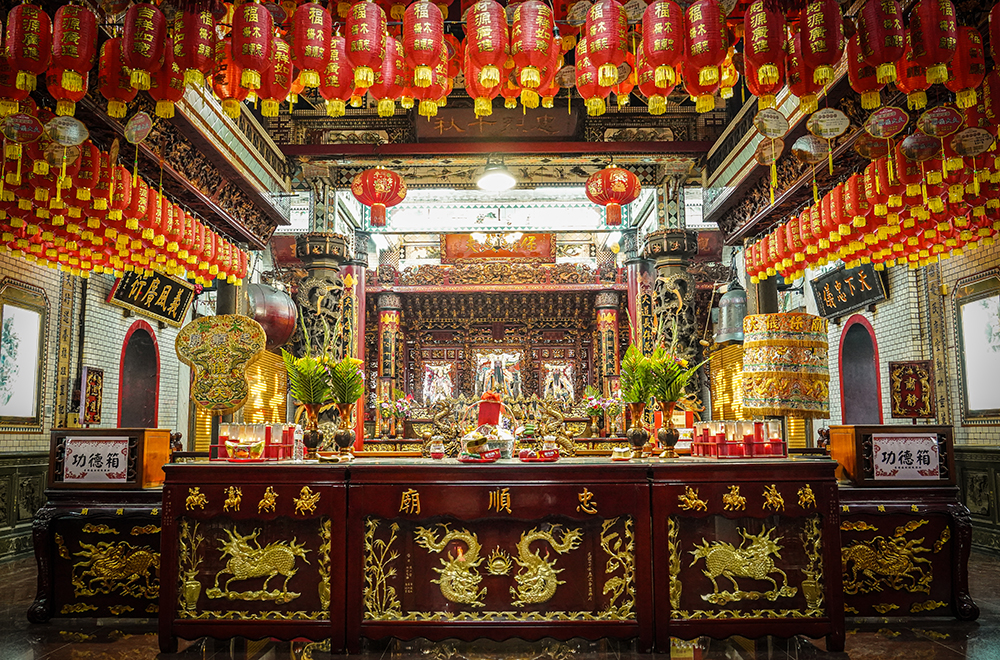
Located in Wenshan District, Muzha Zhongshun Temple is dedicated to Revered King Boayi and Cabinet, Zhang Xun, also known affectionately as "Ong-Kong" (Lord Ong). A loyal Tang Dynasty figure, Zhang Xun is remembered for defending Suiyang during the An Lushan Rebellion. His spirit was later enshrined in Muzha by settlers from Anxi, Fujian, making him a guardian deity for early immigrants and now a central figure in annual rituals held by many villages across the Taipei Basin.
Originally worshipped by descendants of the Chen family, his fame grew due to his miraculous protection—especially in repelling pests and ensuring good harvests. Over time, more locals began to venerate him, leading to the formation of a community deity association. Together, the Chen clan and early settlers raised funds to build a brick-and-tile temple in Zhonglunwei.
In recent years, a Wednesday market has become a regular feature at the temple’s entrance. Children play freely in the courtyard while parents chat nearby, creating a vibrant modern temple culture that blends tradition with contemporary community life.
Originally worshipped by descendants of the Chen family, his fame grew due to his miraculous protection—especially in repelling pests and ensuring good harvests. Over time, more locals began to venerate him, leading to the formation of a community deity association. Together, the Chen clan and early settlers raised funds to build a brick-and-tile temple in Zhonglunwei.
In recent years, a Wednesday market has become a regular feature at the temple’s entrance. Children play freely in the courtyard while parents chat nearby, creating a vibrant modern temple culture that blends tradition with contemporary community life.
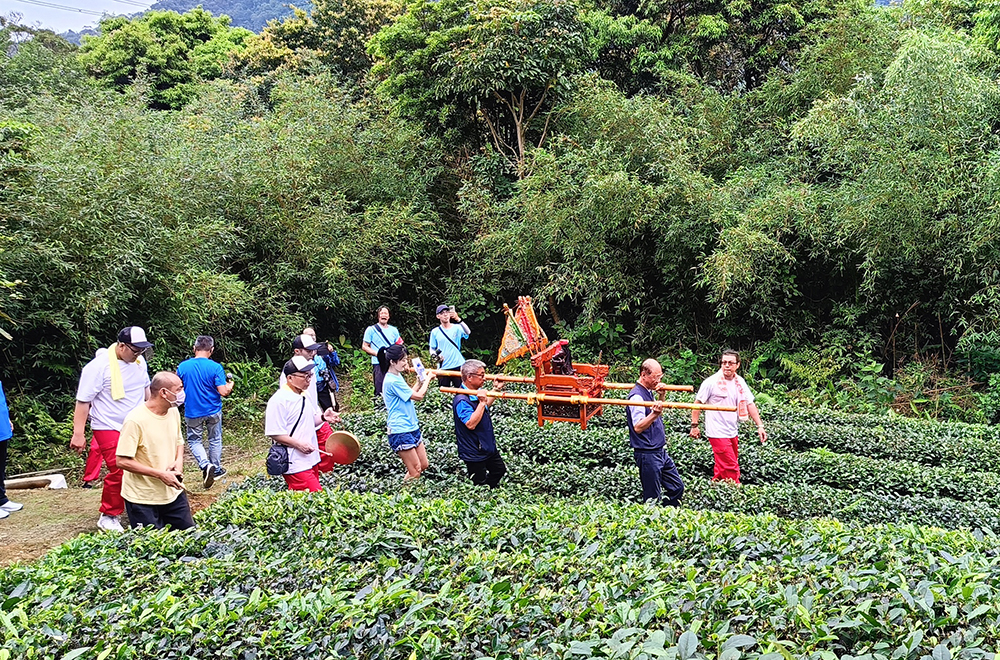 Recently, the “Ong-Kong’s Field Patrol” was revived to bless farmers.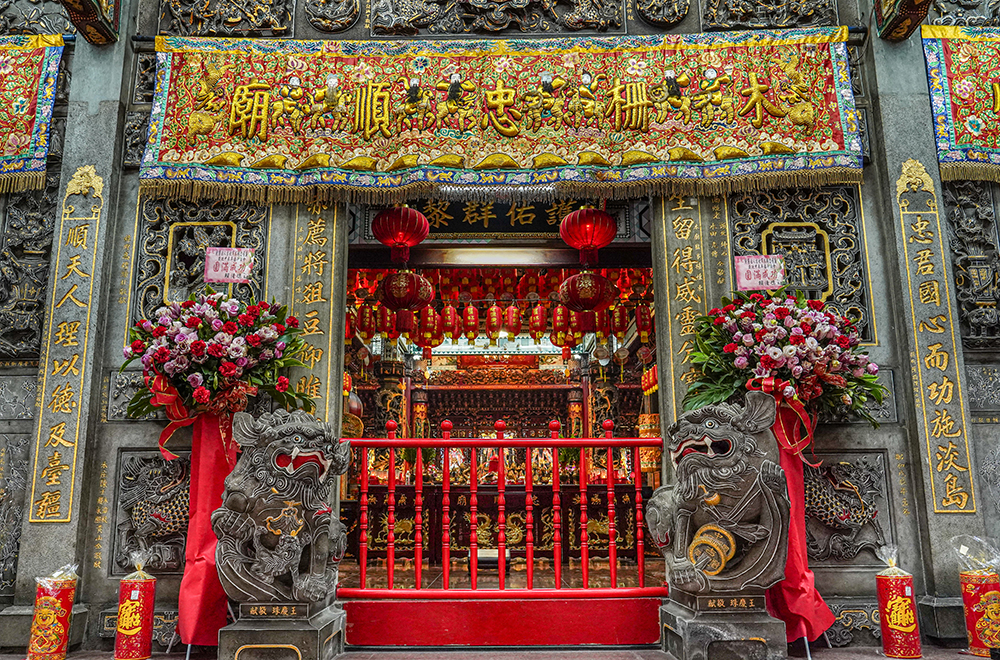
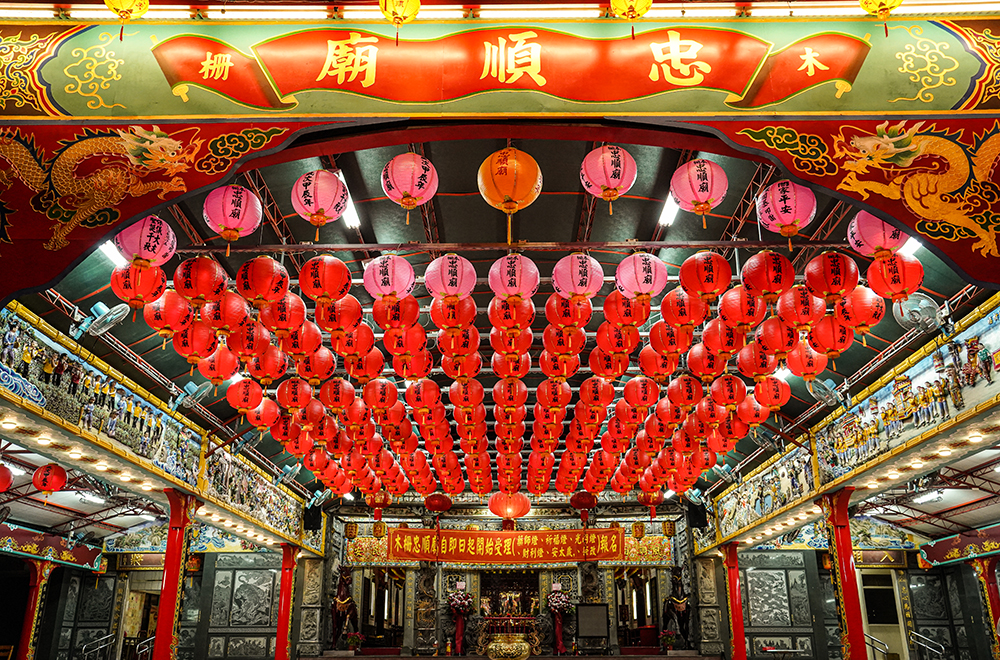 The lantern-filled courtyard is now a popular photo spot.
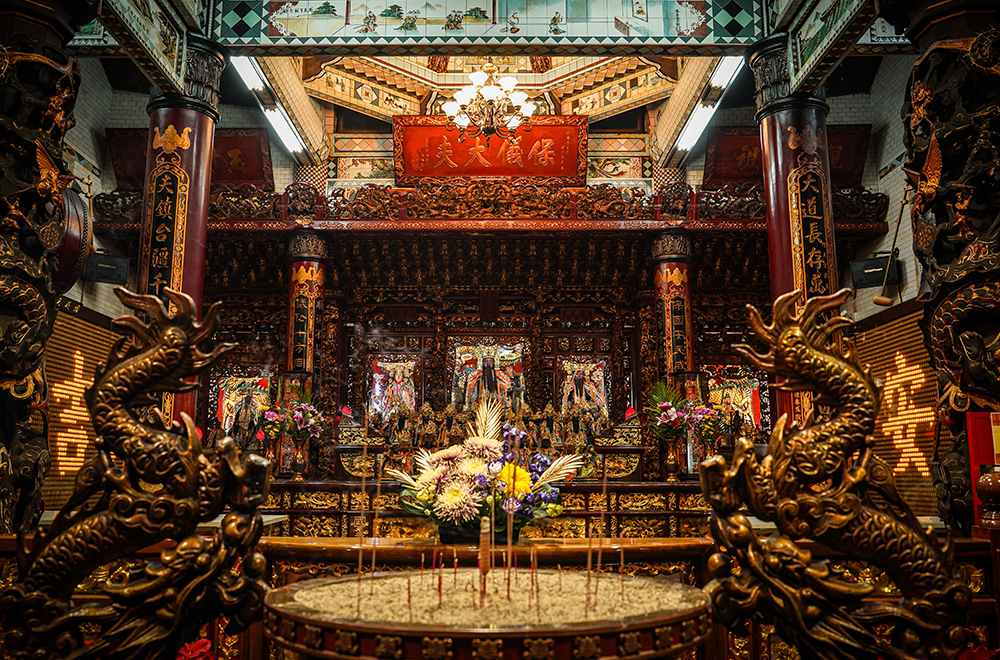 The main hall enshrines General Zhang Xun, Lord Xu Yuan, Lady Zhang, and other deities.
Zhinan Temple
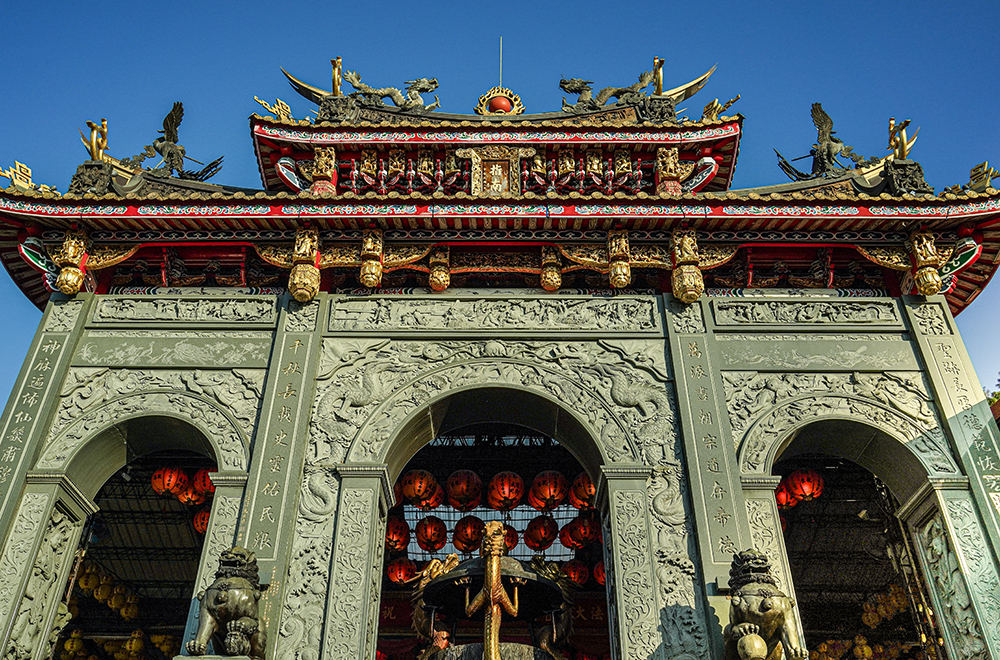 It is said that Lü Dongbin resided in the Southern Palace of Heaven, inspiring the name “Zhinan” (Southward Guidance) for the temple.
Legend has it that the temple's main deity once resided in the Southern Palace of Heaven to aid and guide sentient beings—thus the name “Zhinan,” meaning “Southward Guidance.” Located on the mountainside of Maokong, Zhinan Temple is dedicated to Fuyou Dijun (Lü Dongbin) and various high-ranking deities from the Three Teachings (Confucianism, Buddhism, Taoism). It’s also commonly referred to as the “Muzha Immortal Lord Temple.”
Zhinan Temple offers simple lodgings for devotees, known as the “Dream Chamber.” It’s said that with Lü Dongbin’s permission, those who stay overnight may receive his divine guidance in their dreams.
Along the thousand-step path leading to the temple, visitors can spot stone lanterns from the Japanese colonial era, providing a glimpse into the temple’s layered history and evoking a nostalgic time-warp for hikers and worshippers alike. The temple’s layout, designed by master craftsman Chen Ying-bin, showcases remarkable traditional architectural skill. Visitors who come to enjoy the mountain views and local tea are also enveloped by the temple’s spiritual energy, offering a place of divine blessing and inner reflection.
Zhinan Temple offers simple lodgings for devotees, known as the “Dream Chamber.” It’s said that with Lü Dongbin’s permission, those who stay overnight may receive his divine guidance in their dreams.
Along the thousand-step path leading to the temple, visitors can spot stone lanterns from the Japanese colonial era, providing a glimpse into the temple’s layered history and evoking a nostalgic time-warp for hikers and worshippers alike. The temple’s layout, designed by master craftsman Chen Ying-bin, showcases remarkable traditional architectural skill. Visitors who come to enjoy the mountain views and local tea are also enveloped by the temple’s spiritual energy, offering a place of divine blessing and inner reflection.
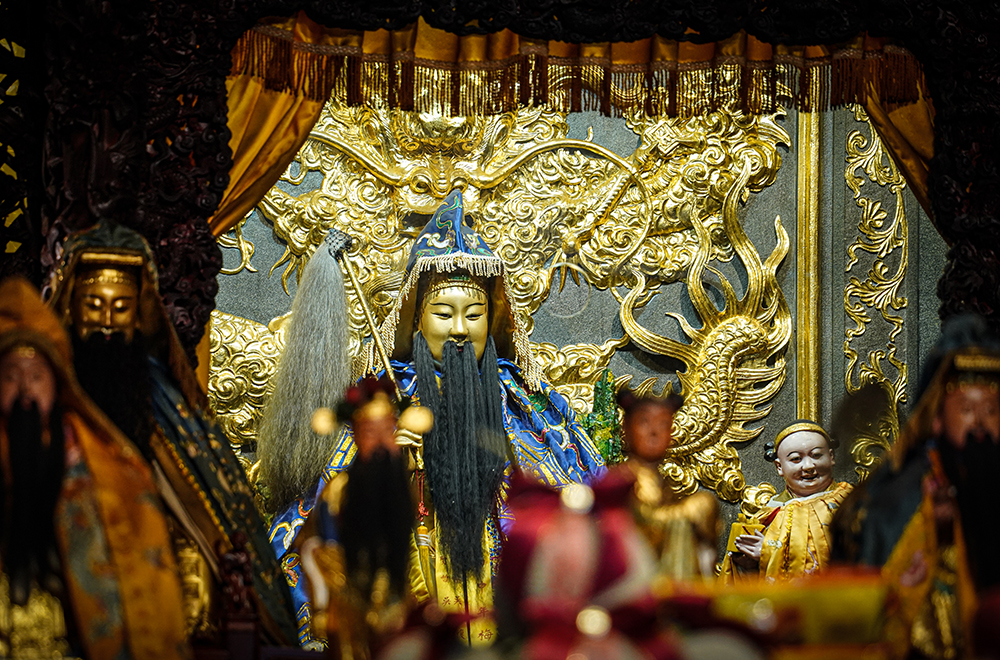 The main hall enshrines Fuyou Dadi, also known as Lü Dongbin or Master Chunyang.
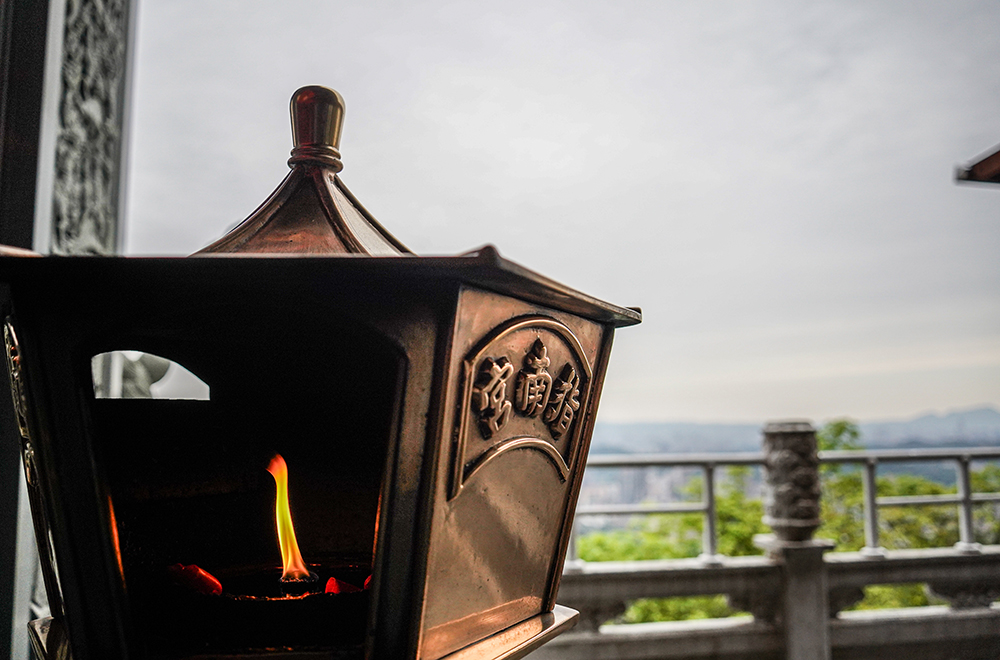 Zhinan Temple’s main hall overlooks the Taipei Basin.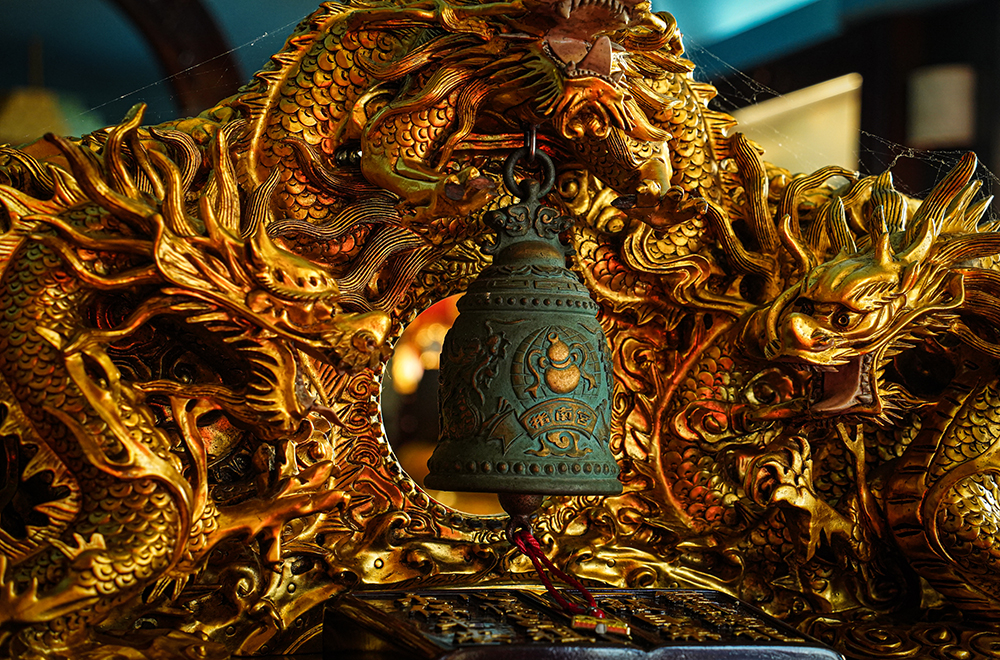
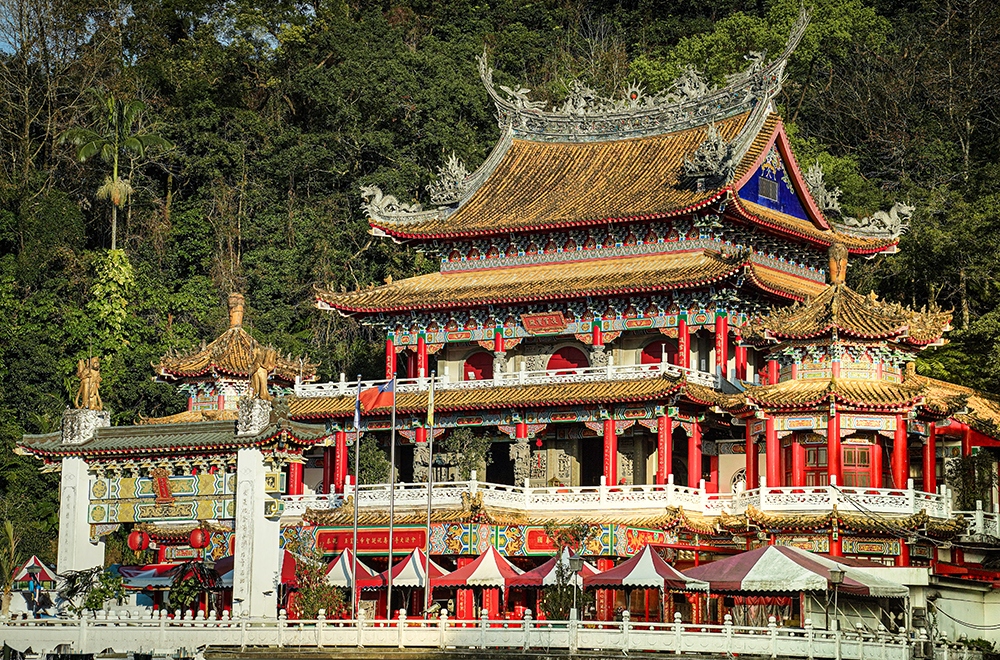 The Lingxiao Hall on the hillside behind Zhinan Temple stands with majestic and solemn grandeur.
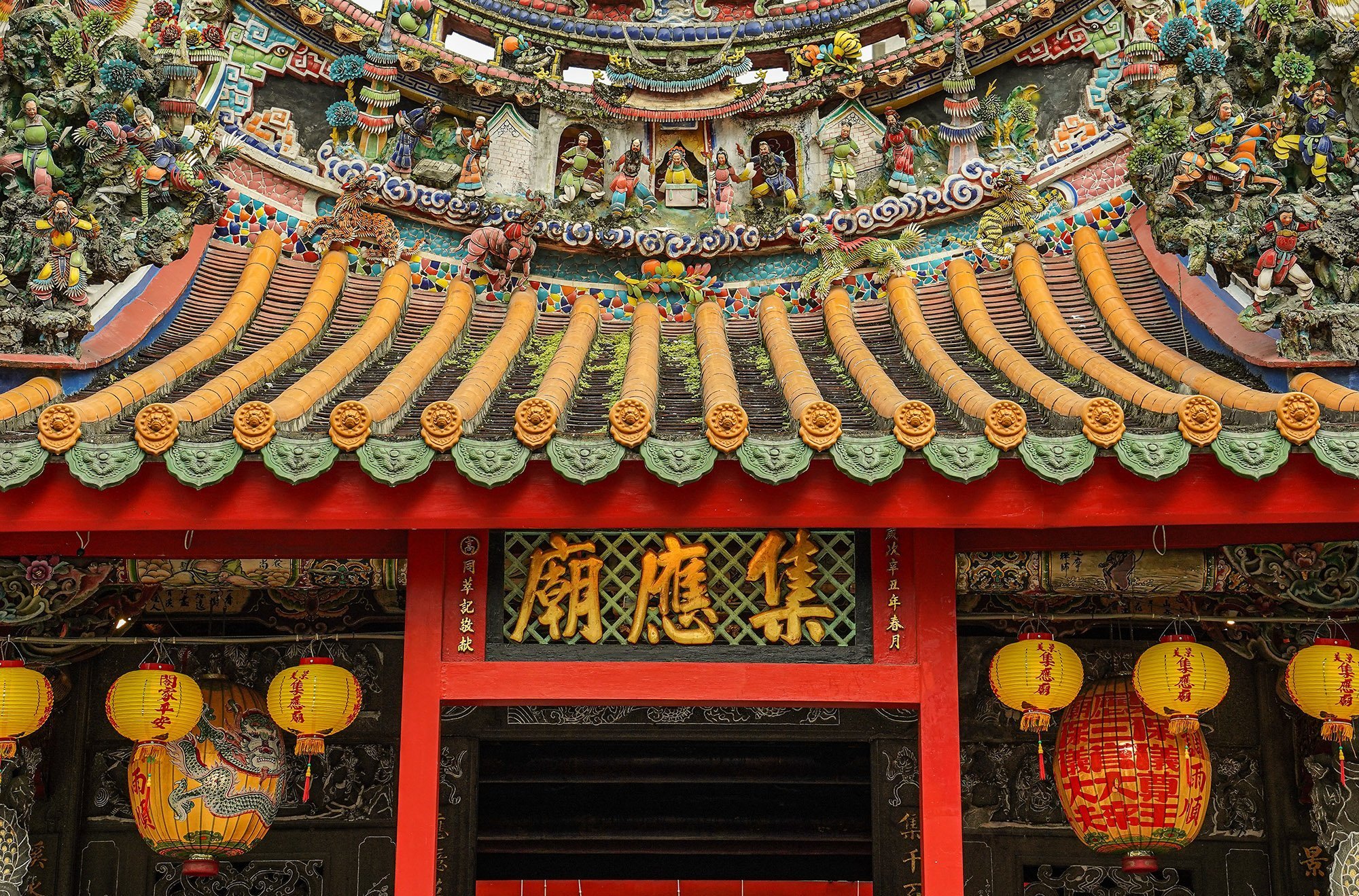
Jiying Temple in Jingmei
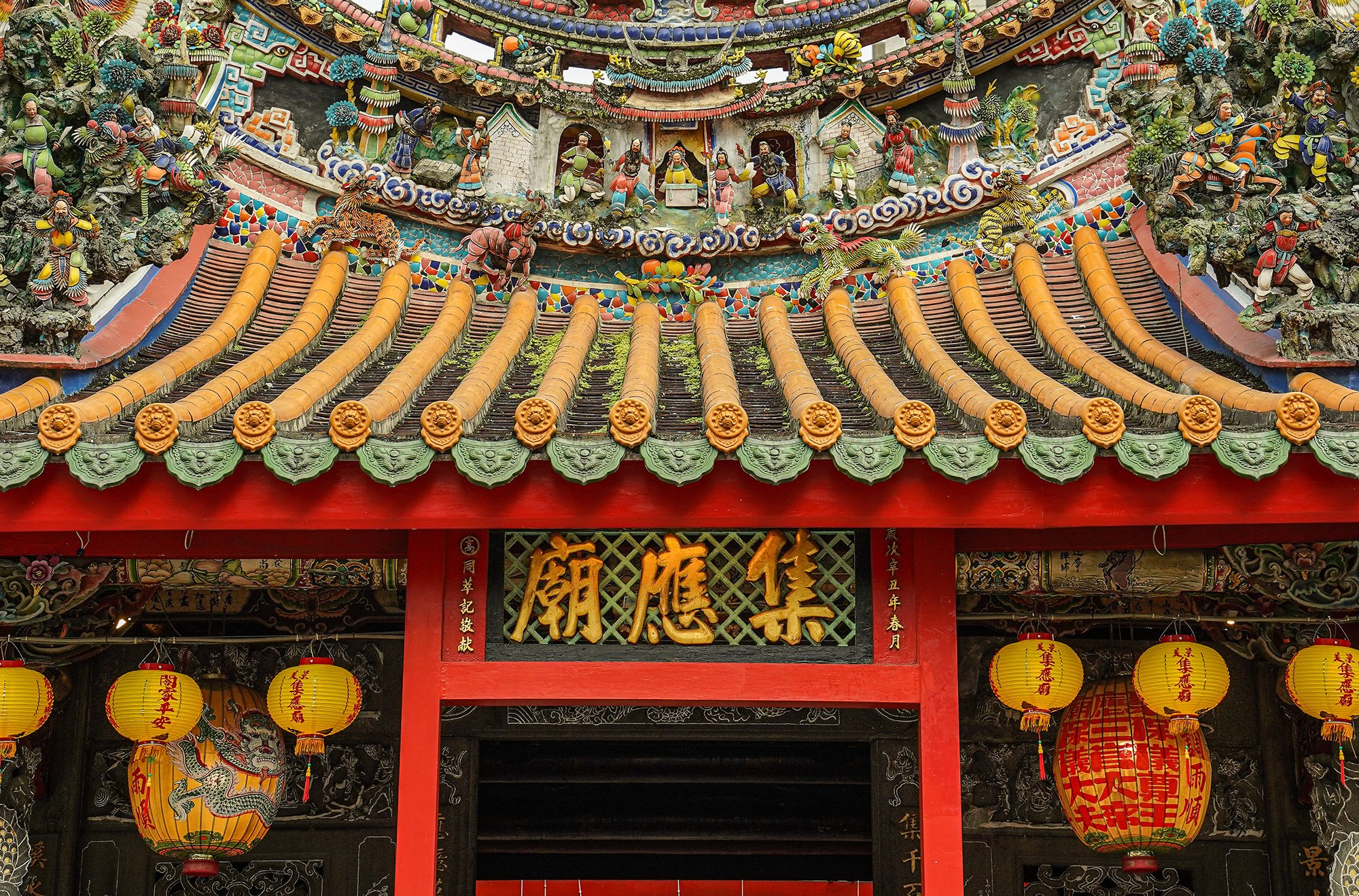
Jiying Temple in Jingmei is dedicated to Lord Zhang Xun (also known as Lord Ong or Revered King Boayi and Cabinet), who has long been revered as a protector of the local community.
According to tradition, during times of migration and hardship, the Gao, Zhang, and Lin clans collectively experienced divine guidance and protection from Lord Ong. This spiritual response brought them peace of mind amid turmoil, inspiring the name “Jiying,” meaning “gathered response.” It's hard to imagine the arduous journey their ancestors undertook—from fleeing war in Henan to settling in Fujian.
The annual “Jingmei Great Worship Festival” is a major local event. Devotees offer incense and ceremonial tables in gratitude, while some light grand fireworks to welcome the deity. Streams of residents visit the temple to pay respects to the god who has watched over them all year.
Situated next to the bustling Jingmei Night Market, the temple blends the energy of a traditional fair with deep-rooted religious heritage. As a central hub of local faith, Jiying Temple in Jingmei connects history, folklore, and community ties—offering both locals and visitors a glimpse of Taipei’s rich cultural warmth and unity.
According to tradition, during times of migration and hardship, the Gao, Zhang, and Lin clans collectively experienced divine guidance and protection from Lord Ong. This spiritual response brought them peace of mind amid turmoil, inspiring the name “Jiying,” meaning “gathered response.” It's hard to imagine the arduous journey their ancestors undertook—from fleeing war in Henan to settling in Fujian.
The annual “Jingmei Great Worship Festival” is a major local event. Devotees offer incense and ceremonial tables in gratitude, while some light grand fireworks to welcome the deity. Streams of residents visit the temple to pay respects to the god who has watched over them all year.
Situated next to the bustling Jingmei Night Market, the temple blends the energy of a traditional fair with deep-rooted religious heritage. As a central hub of local faith, Jiying Temple in Jingmei connects history, folklore, and community ties—offering both locals and visitors a glimpse of Taipei’s rich cultural warmth and unity.
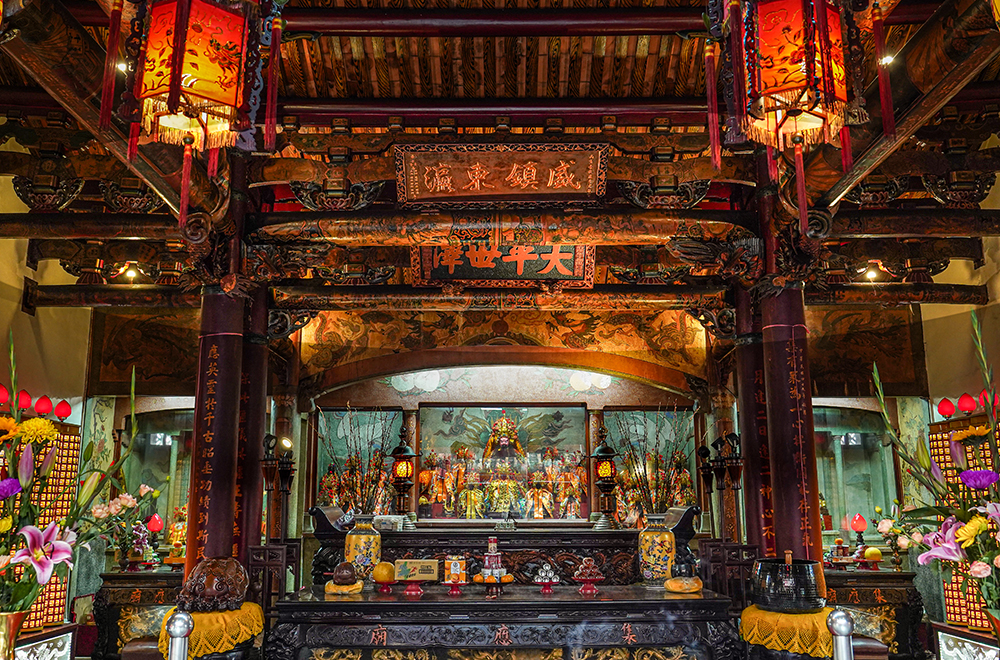 The main hall enshrines Lord Zhang Xun, also known as Angkong or Weng Gong.
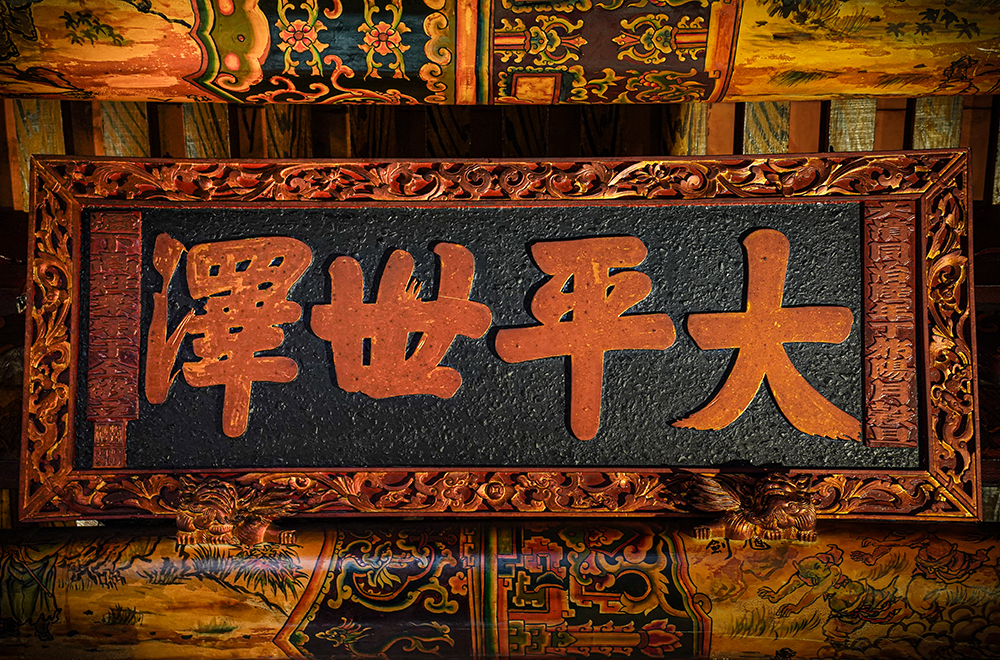 Jiying Temple in Jingmei is jointly worshipped by the Kao clan, with a dedicatory plaque in the main hall reading “Great Peace and Everlasting Blessings.”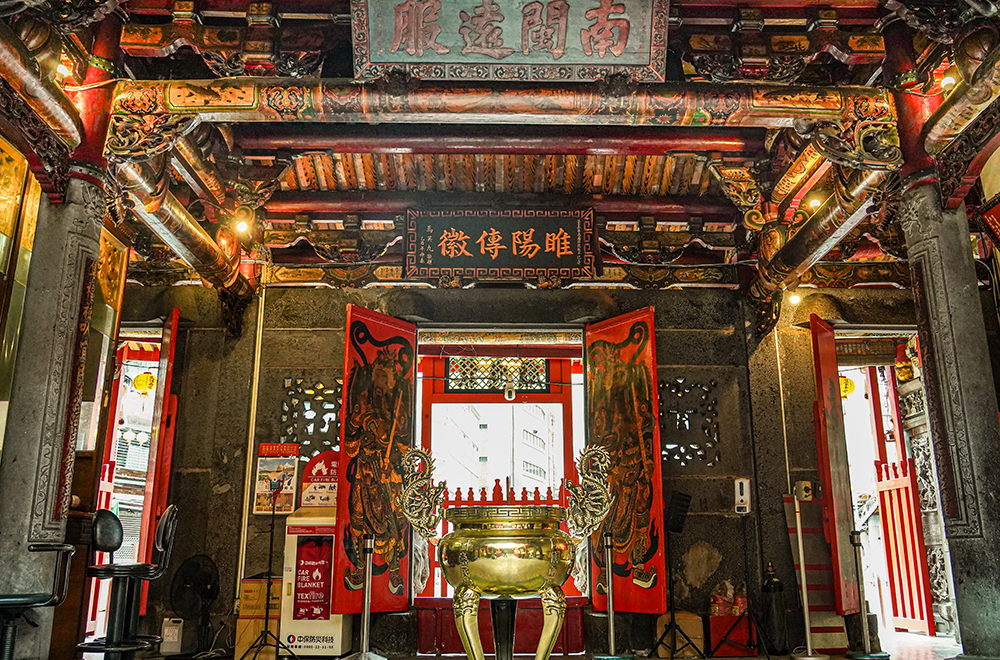
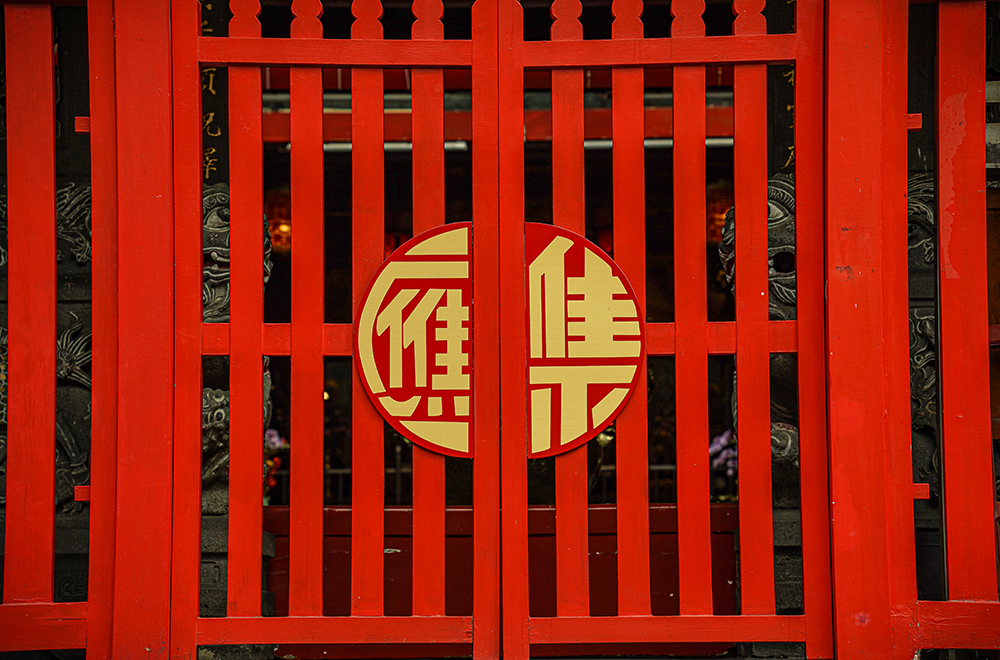 The Angkong faith was originally shared by the Gao, Zhang, and Lin clans from Anxi, Fujian.