

/
-
Taipei Time Tunnel—
Datong-Wanhua LineWanhua and Datong carry Taipei's rich history, cultural heritage, and faith, serving as a crossroads for traditional and pop culture. The Ningxia Night Market and Mengjia cuisine showcase the old flavors of Taipei.
-
Taipei Time Tunnel—
Datong-Wanhua LineWanhua and Datong carry Taipei's rich history, cultural heritage, and faith, serving as a crossroads for traditional and pop culture. The Ningxia Night Market and Mengjia cuisine showcase the old flavors of Taipei.
-
Taipei Time Tunnel—
Datong-Wanhua LineWanhua and Datong carry Taipei's rich history, cultural heritage, and faith, serving as a crossroads for traditional and pop culture. The Ningxia Night Market and Mengjia cuisine showcase the old flavors of Taipei.
-
Taipei Time Tunnel—
Datong-Wanhua LineWanhua and Datong carry Taipei's rich history, cultural heritage, and faith, serving as a crossroads for traditional and pop culture. The Ningxia Night Market and Mengjia cuisine showcase the old flavors of Taipei.
-
Taipei Time Tunnel—
Datong-Wanhua LineWanhua and Datong carry Taipei's rich history, cultural heritage, and faith, serving as a crossroads for traditional and pop culture. The Ningxia Night Market and Mengjia cuisine showcase the old flavors of Taipei.
-
Taipei Time Tunnel—
Datong-Wanhua LineWanhua and Datong carry Taipei's rich history, cultural heritage, and faith, serving as a crossroads for traditional and pop culture. The Ningxia Night Market and Mengjia cuisine showcase the old flavors of Taipei.
-
Taipei Time Tunnel—
Datong-Wanhua LineWanhua and Datong carry Taipei's rich history, cultural heritage, and faith, serving as a crossroads for traditional and pop culture. The Ningxia Night Market and Mengjia cuisine showcase the old flavors of Taipei.
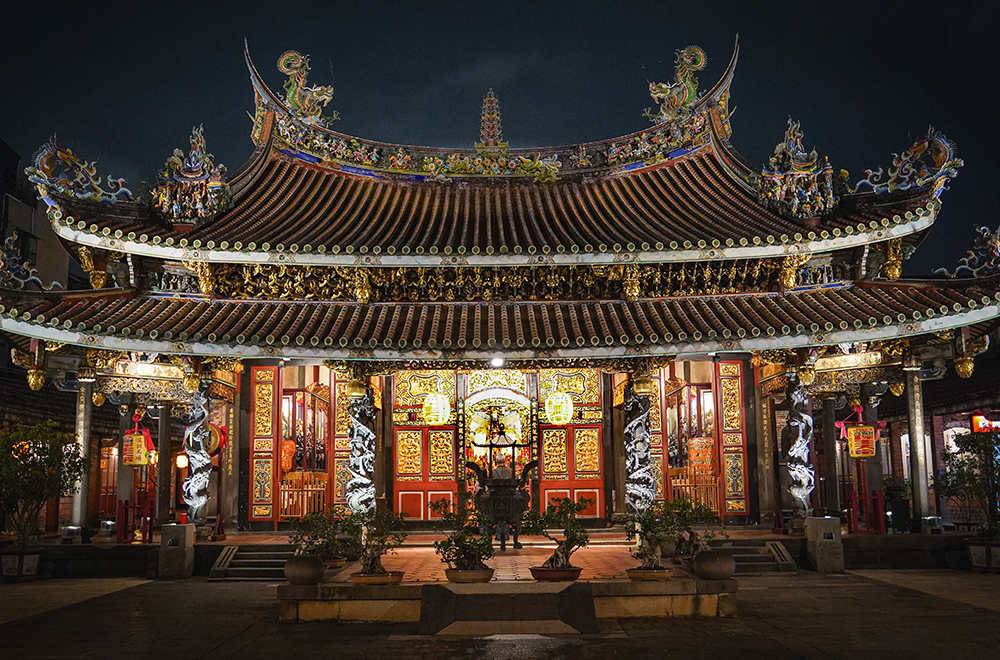
Baoan Temple
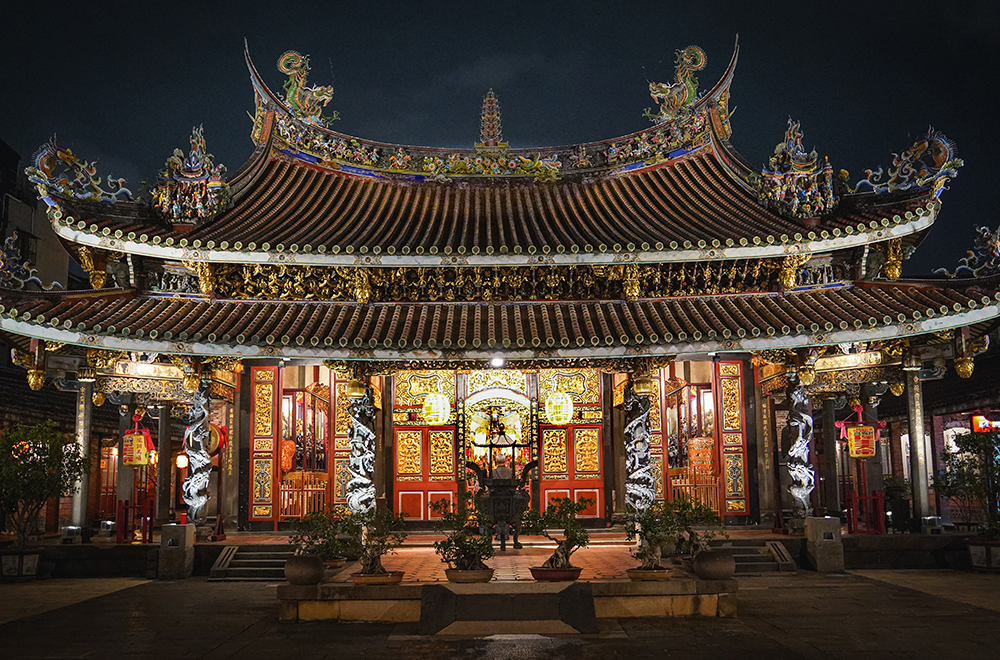 The main hall and front hall of Baoan Temple were collaboratively built by renowned master craftsmen of the time.
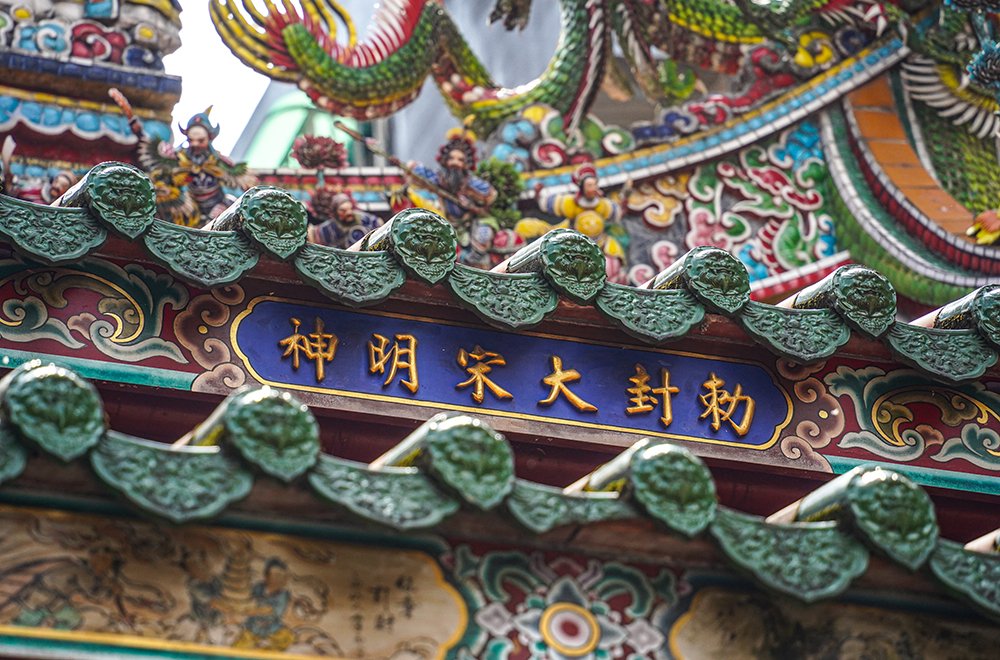
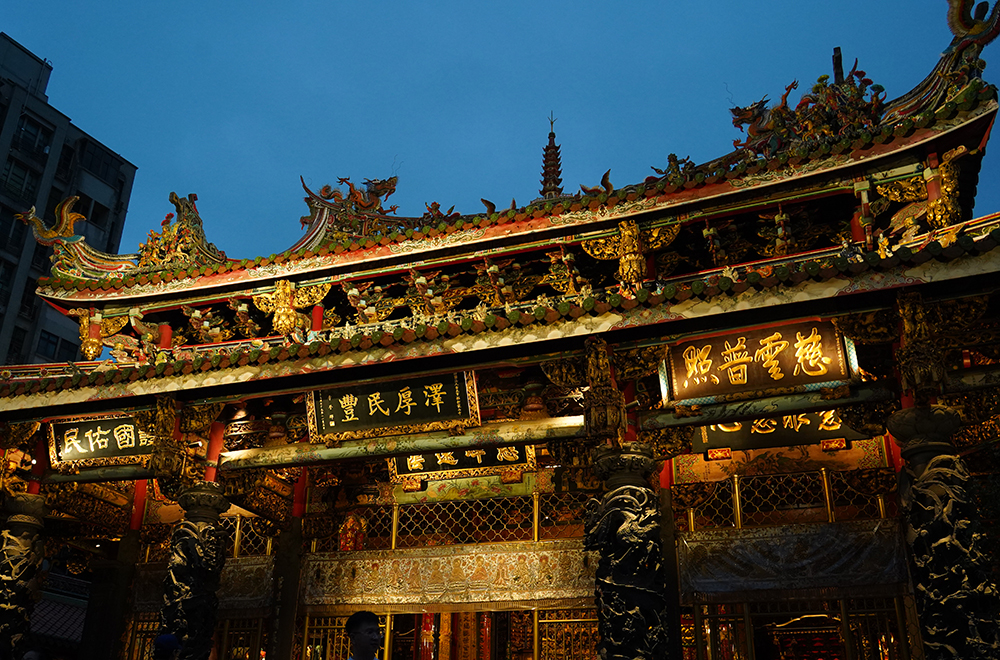
Baoan Temple was built during the Qing Dynasty's Qianlong era and is dedicated to Baosheng Dadi, the God of Medicine, who blesses worshippers with health and peace. The temple’s architecture is exquisite, with intricate wooden carvings, soaring eaves, and beautifully crafted dougong (bracket sets), showcasing the artistry of traditional craftsmen.
The annual birthday celebration of Baosheng Dadi held at the temple is a major cultural event not only for the Dalongdong area but for all of Taipei. The festivities include traditional opera performances by family troupes, fire lion displays, and folk art processions. The "Baosheng Cultural Festival" has been officially registered as Taipei City’s intangible cultural heritage. As the only temple in Taiwan honored with the UNESCO Asia-Pacific Heritage Award for Cultural Heritage Conservation, Bao'an Temple stands as a cultural landmark—merging faith, tradition, and innovation—and serves as a vital site for locals and visitors to experience the richness of Taipei’s religious heritage.
The annual birthday celebration of Baosheng Dadi held at the temple is a major cultural event not only for the Dalongdong area but for all of Taipei. The festivities include traditional opera performances by family troupes, fire lion displays, and folk art processions. The "Baosheng Cultural Festival" has been officially registered as Taipei City’s intangible cultural heritage. As the only temple in Taiwan honored with the UNESCO Asia-Pacific Heritage Award for Cultural Heritage Conservation, Bao'an Temple stands as a cultural landmark—merging faith, tradition, and innovation—and serves as a vital site for locals and visitors to experience the richness of Taipei’s religious heritage.
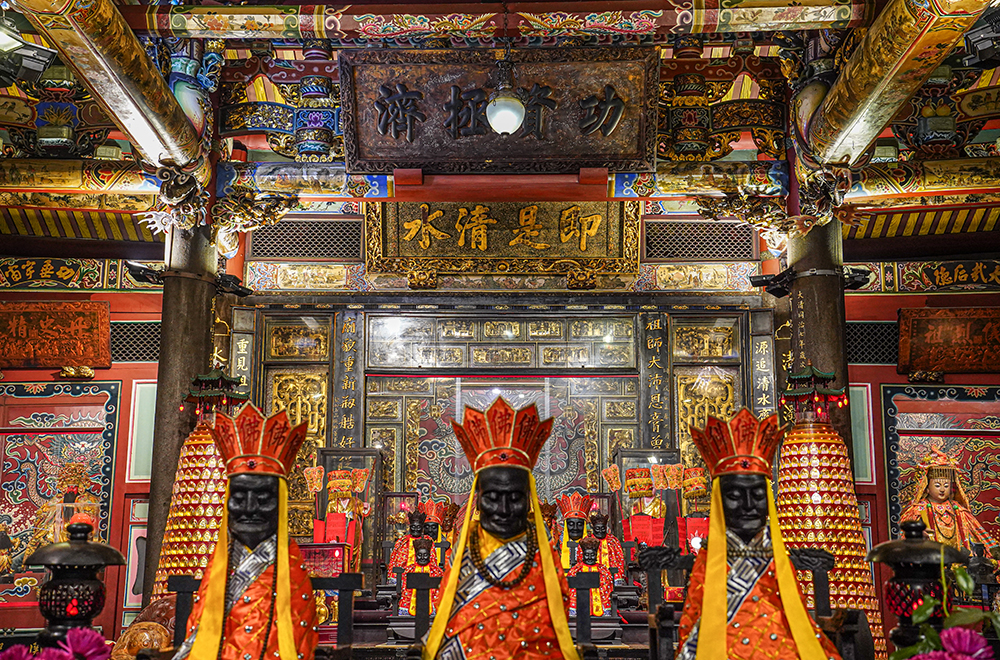
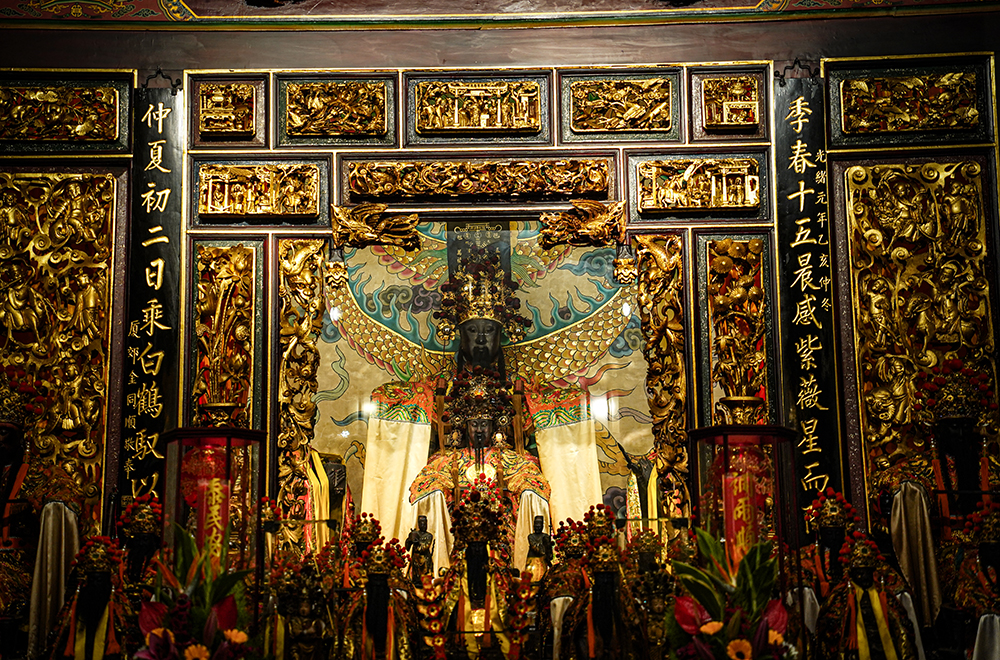 Baoan Temple is dedicated to Baosheng Dadi. The ancestral statues of the First, Second, and Third Patriarchs enshrined in the main hall are designated historical artifacts of Taipei City.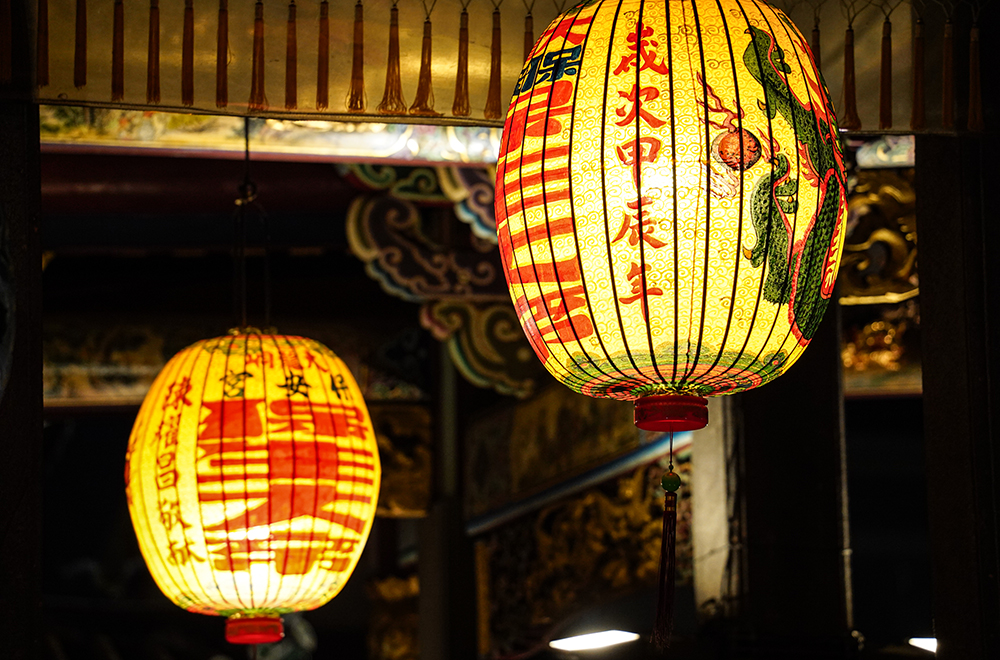
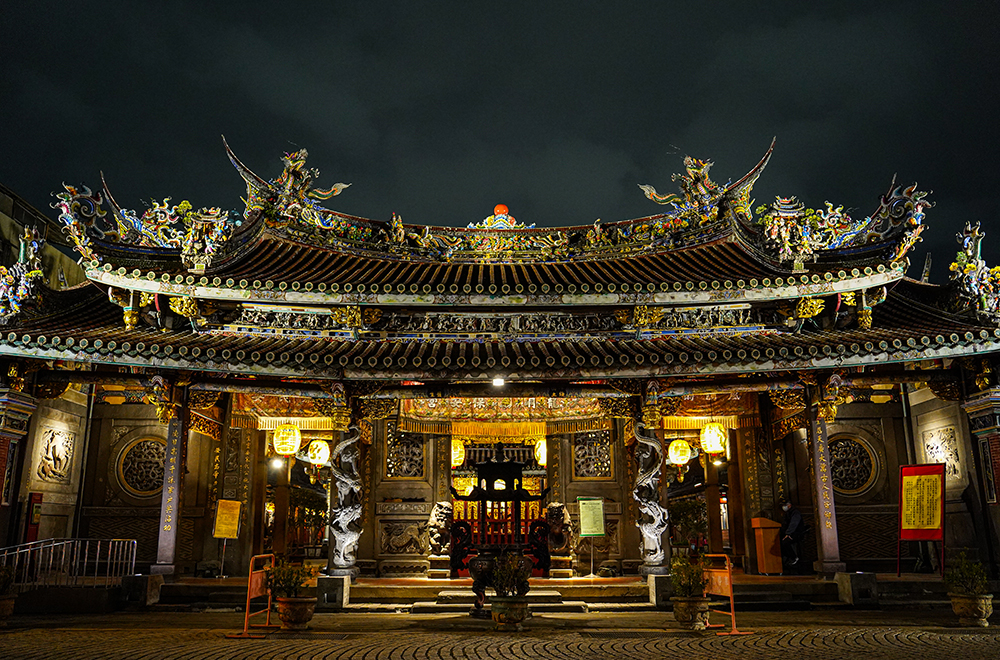
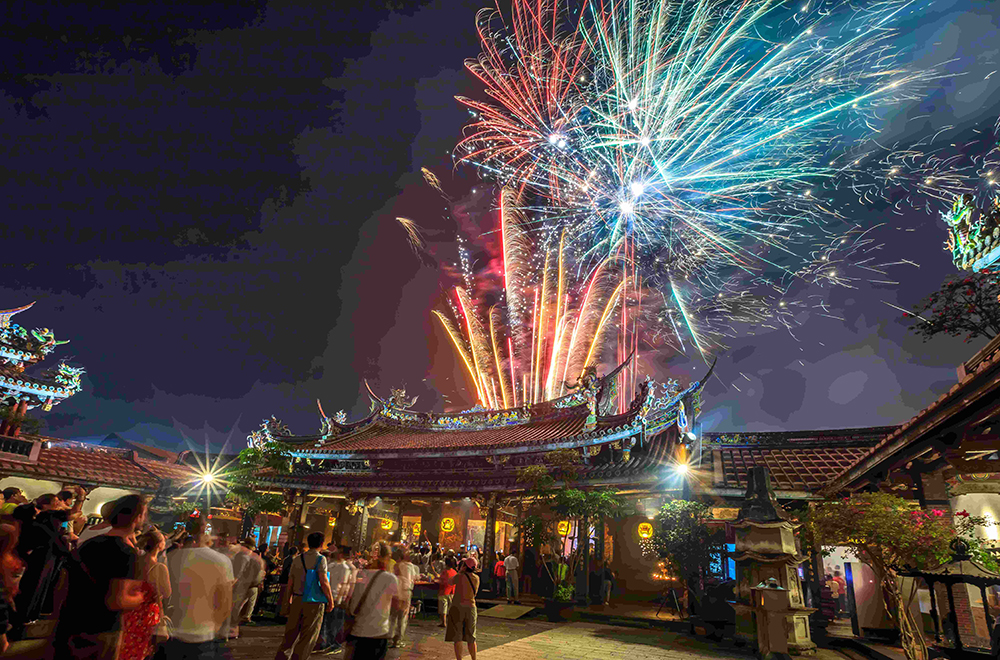 A radiant view of Baoan Temple (photo by Liao Fu-lin).
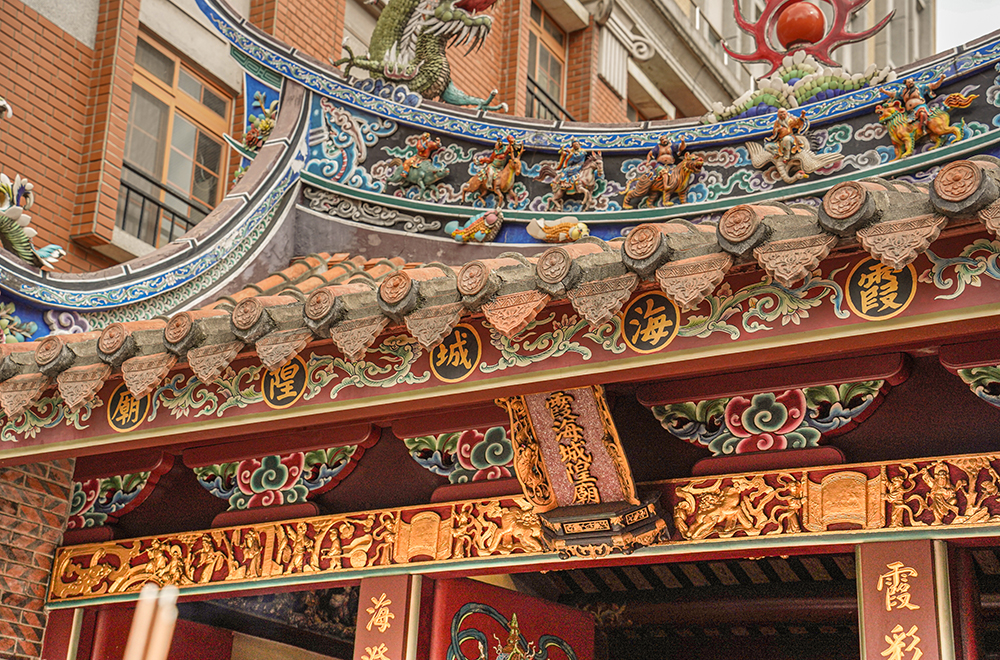
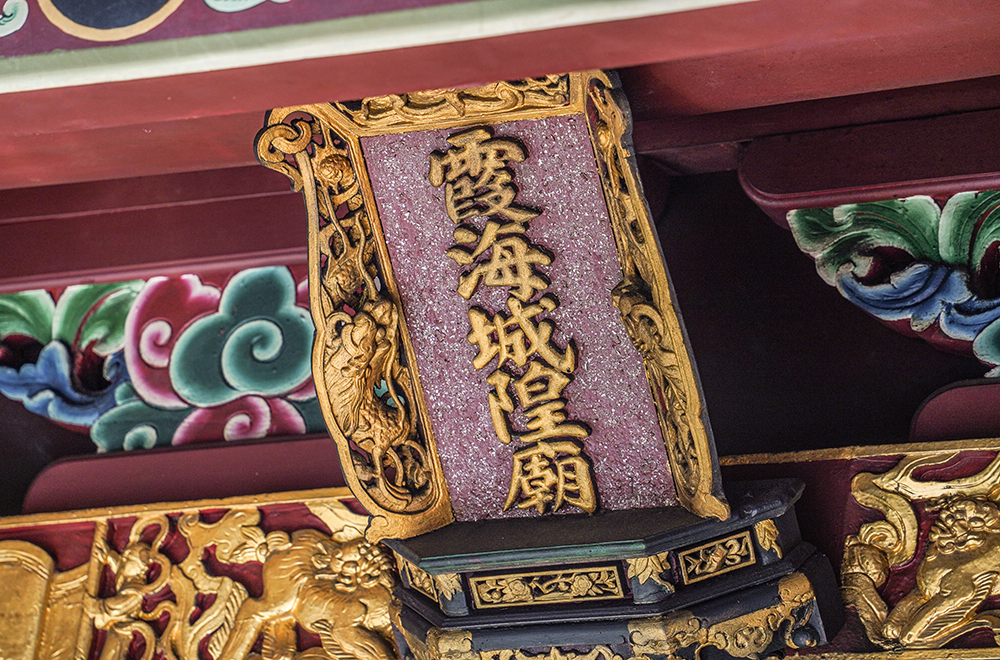
Taipei Xiahai City God Temple
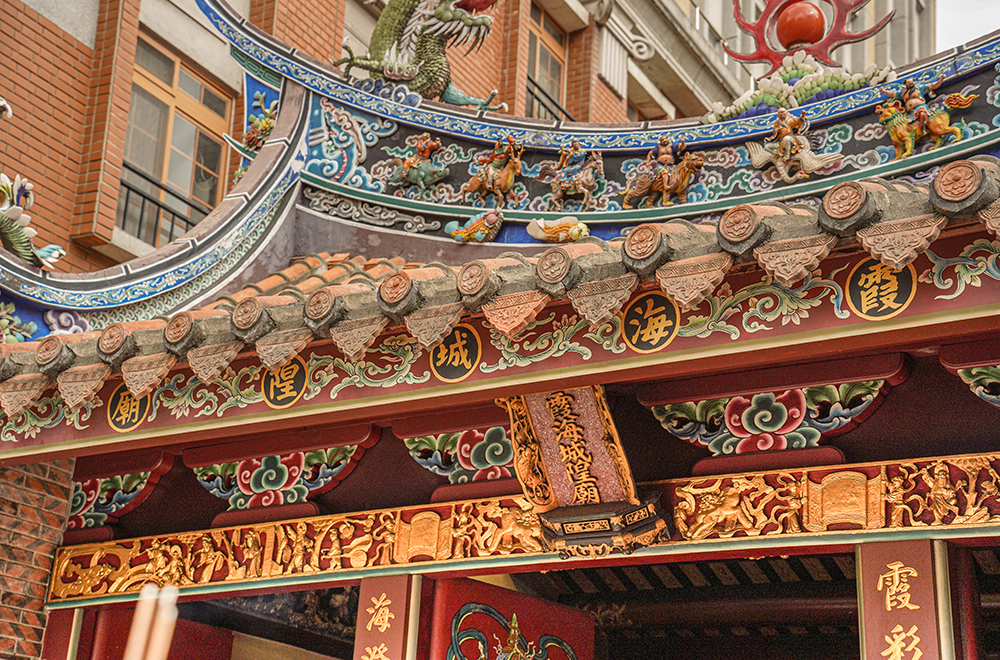
Located in the bustling Dadaocheng commercial district, Taipei Xia-Hai City God Temple has safeguarded the peace of the local community since its construction during the Qing Dynasty. The temple enshrines the Xia-Hai City God, revered as the guardian deity of the city, and is also widely known for its powerful Yue Lao (the Old Man under the Moon), the deity of love and marriage. The temple draws endless streams of worshippers who come to pray for romantic blessings and fateful red strings.
In addition to upholding the City God’s role in justice and protection, the temple—through the loving symbolism of Yue Lao—bridges local history with modern-day life. Situated in Dadaocheng, a historic hub once thriving with textile and tea traders, the temple is adjacent to the famed Dihua Street shopping area. With its preserved charm and old-town atmosphere, the neighborhood remains rich in local culture and hospitality. The Xia-Hai City God Temple is a beloved landmark of faith, frequently visited by both residents and tourists seeking blessings and a connection to Taipei's enduring cultural spirit.
In addition to upholding the City God’s role in justice and protection, the temple—through the loving symbolism of Yue Lao—bridges local history with modern-day life. Situated in Dadaocheng, a historic hub once thriving with textile and tea traders, the temple is adjacent to the famed Dihua Street shopping area. With its preserved charm and old-town atmosphere, the neighborhood remains rich in local culture and hospitality. The Xia-Hai City God Temple is a beloved landmark of faith, frequently visited by both residents and tourists seeking blessings and a connection to Taipei's enduring cultural spirit.
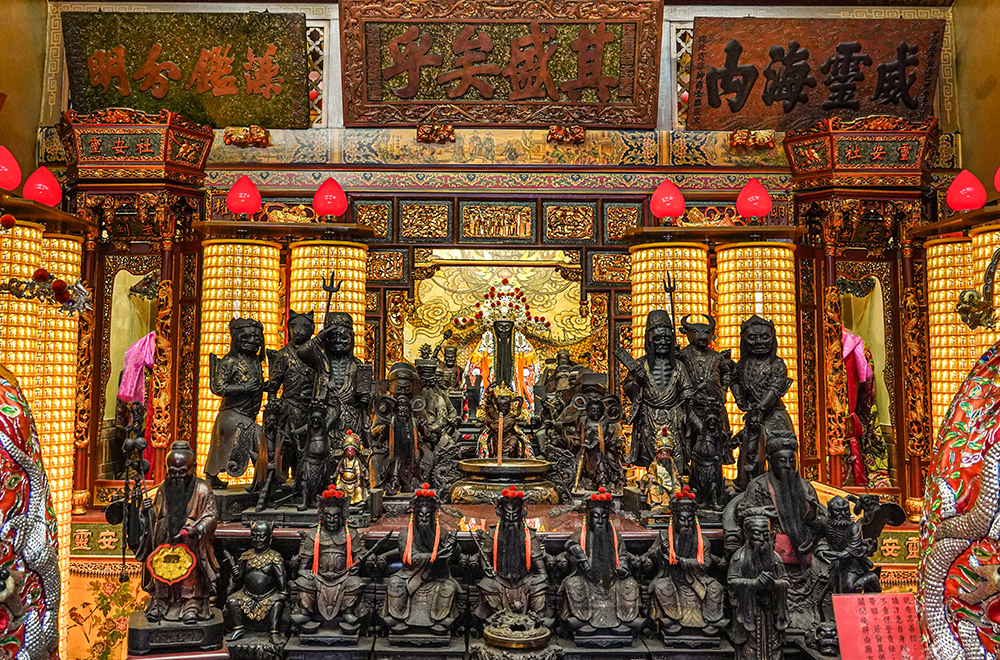 The main hall enshrines the Xiahai City God, and many of its relics hold significant historical value.
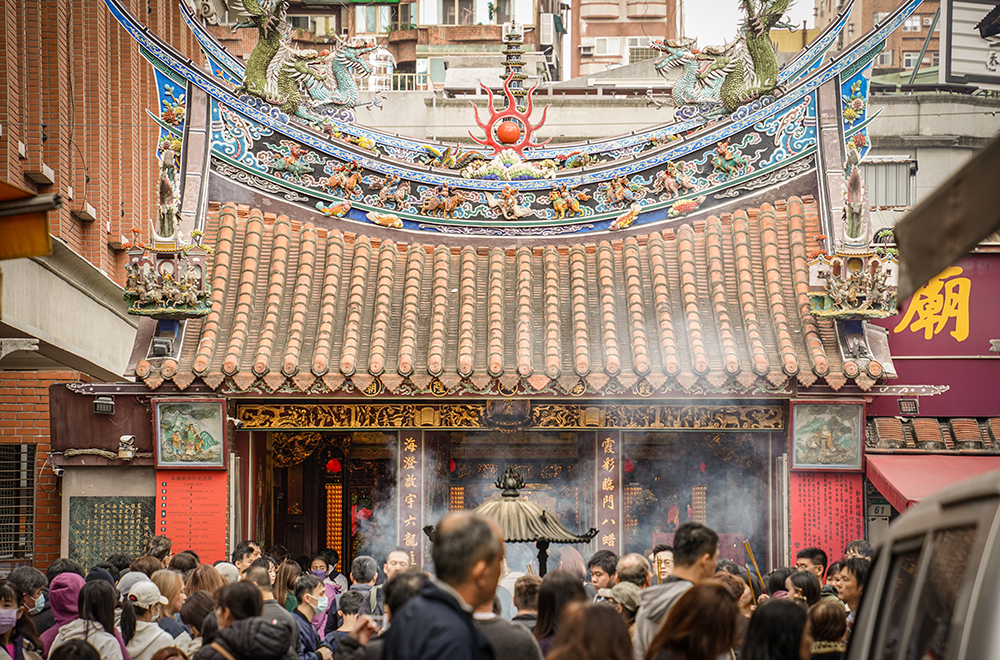 The entrance of Taipei Xiahai City God Temple opens onto Dihua Street, which is bustling with activity all day long.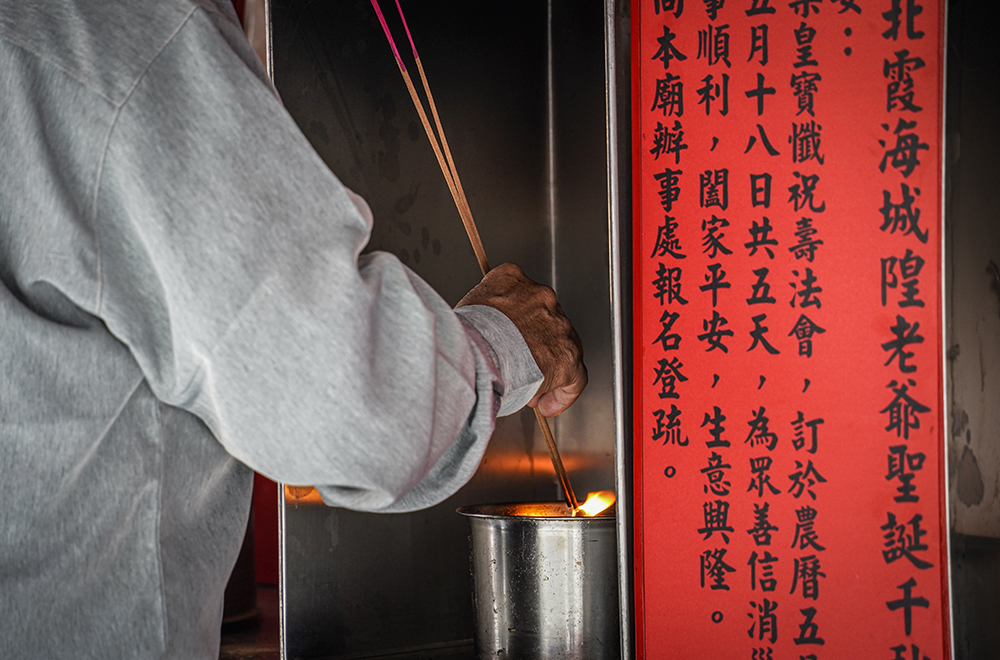
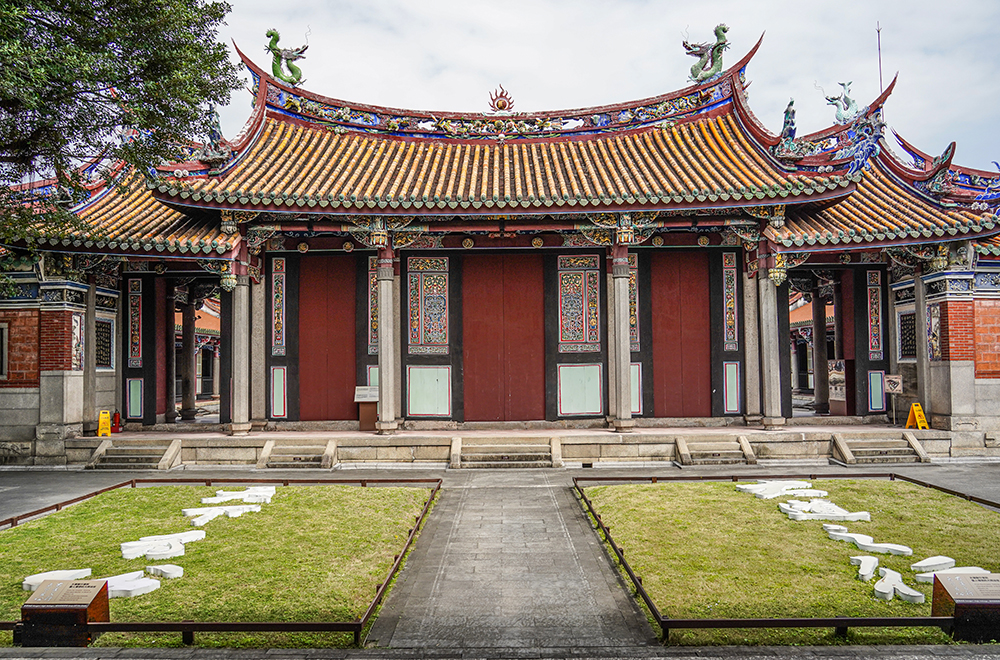
Confucius Temple
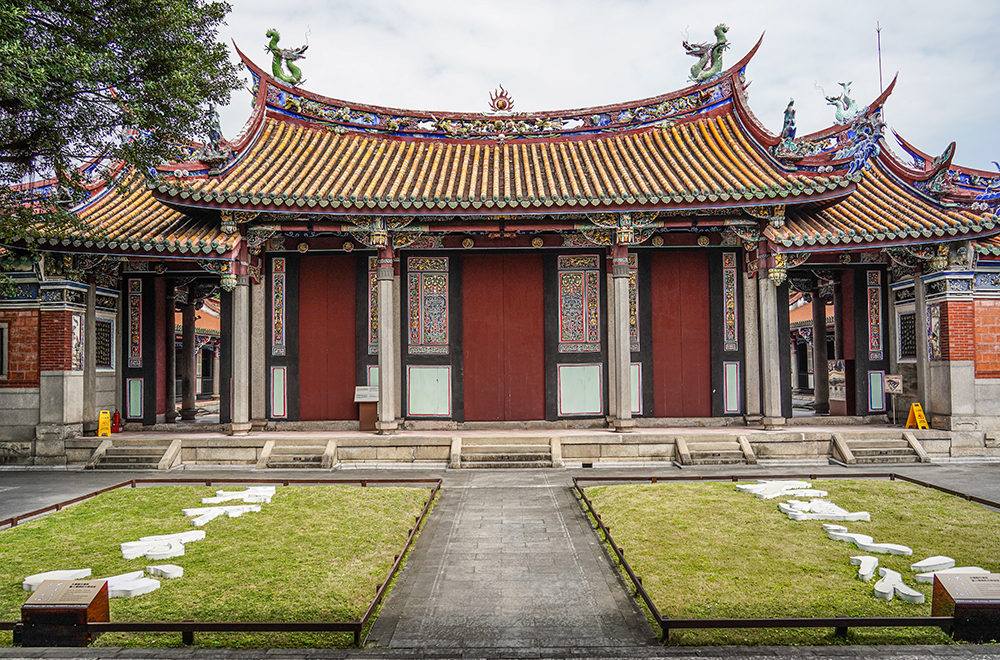 “The way of great unity is a world shared by all” is a quote from the Book of Rites – Chapter on the Conveyance of Rites.
Located in the culturally rich Dalongdong Old Street, Confucius Temple is a sacred sanctuary of Confucianism. The solemn Dacheng Hall houses a spirit tablet dedicated to “The Great Accomplished and Most Sacred Teacher Confucius.” Hanging plaques bearing inscriptions such as “Education for All” reflect the core values of Confucian philosophy. The temple grounds also feature a stele forest, calligraphy plaques, and stone carvings that honor the legacy of cultural sages.
Throughout the year, the temple hosts various cultural performances and lectures. The highlight is the annual Confucius Memorial Ceremony held on September 28 (Teacher’s Day in Taiwan), celebrating Confucius’s birthday with traditional rites. This grand ritual pays tribute to the revered teacher and allows participants to experience the depth of Confucian culture. By blending heritage with modern interpretations, the temple continues to carry forward its educational spirit, making it an essential cultural landmark in Taipei.
Throughout the year, the temple hosts various cultural performances and lectures. The highlight is the annual Confucius Memorial Ceremony held on September 28 (Teacher’s Day in Taiwan), celebrating Confucius’s birthday with traditional rites. This grand ritual pays tribute to the revered teacher and allows participants to experience the depth of Confucian culture. By blending heritage with modern interpretations, the temple continues to carry forward its educational spirit, making it an essential cultural landmark in Taipei.
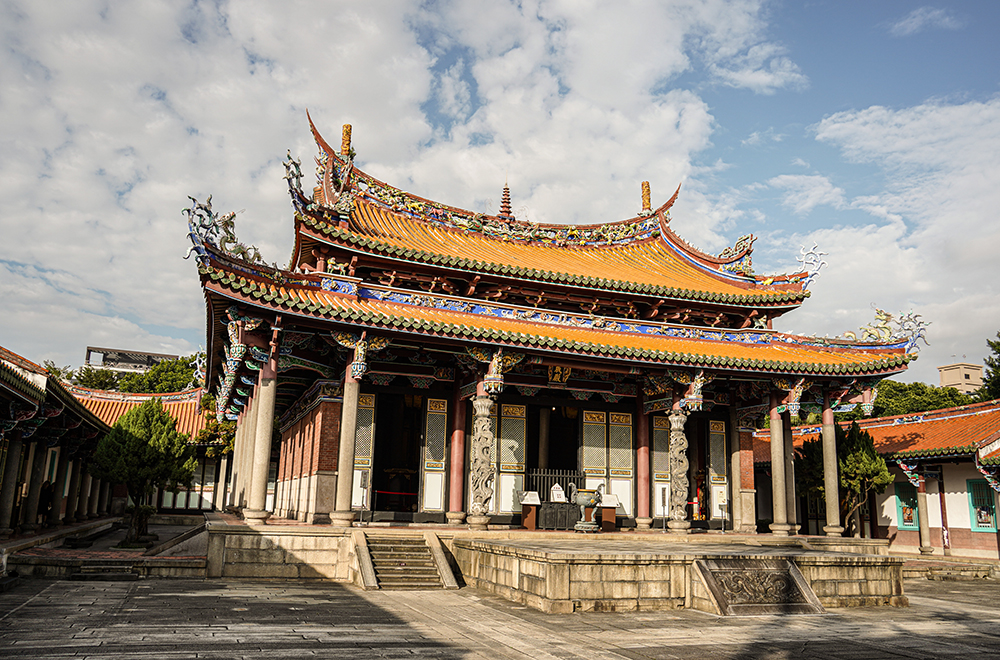 “Dacheng Hall” symbolizes the culmination of wisdom from ancient sages and virtuous teachers.
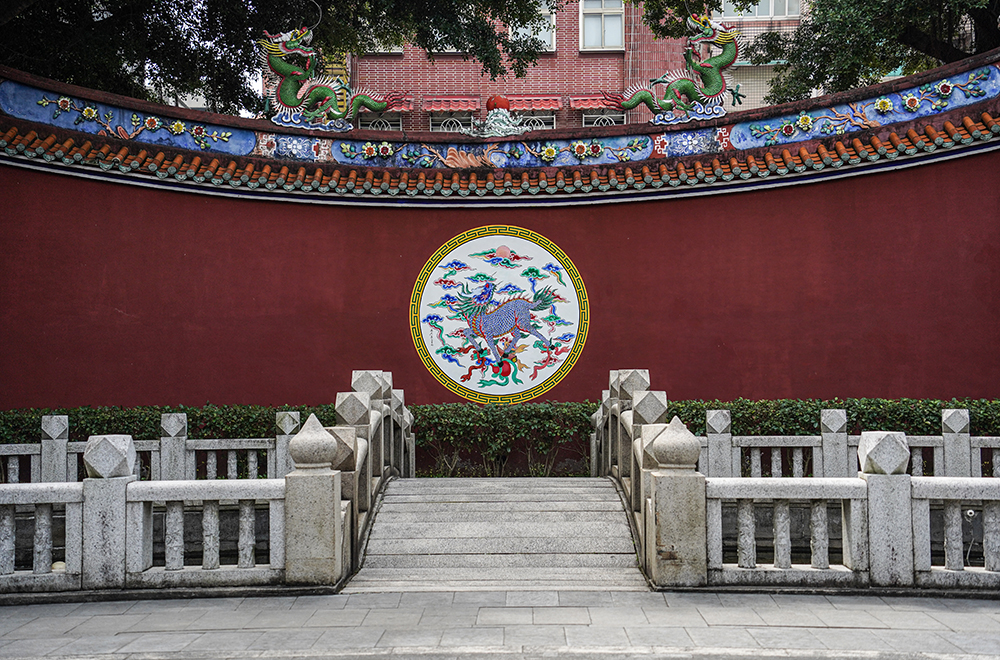 Behind the high palace walls are the Pan Pond and Pan Bridge, once crossed by top imperial exam scholars as a mark of honor.
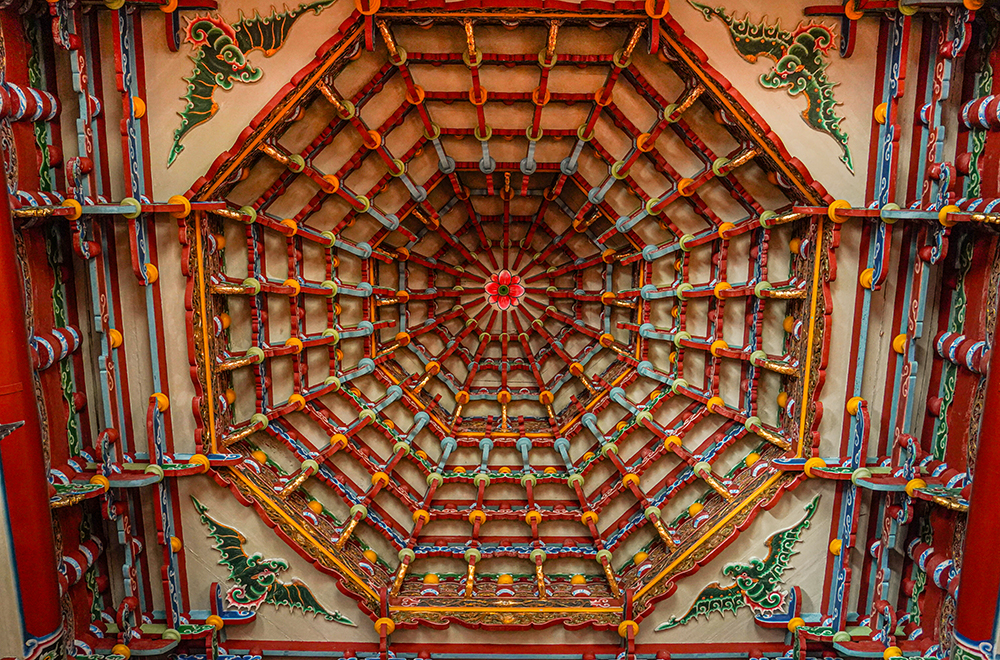 The coffered ceiling was masterfully designed by Wang Yi-shun, a craftsman of the Quanzhou school.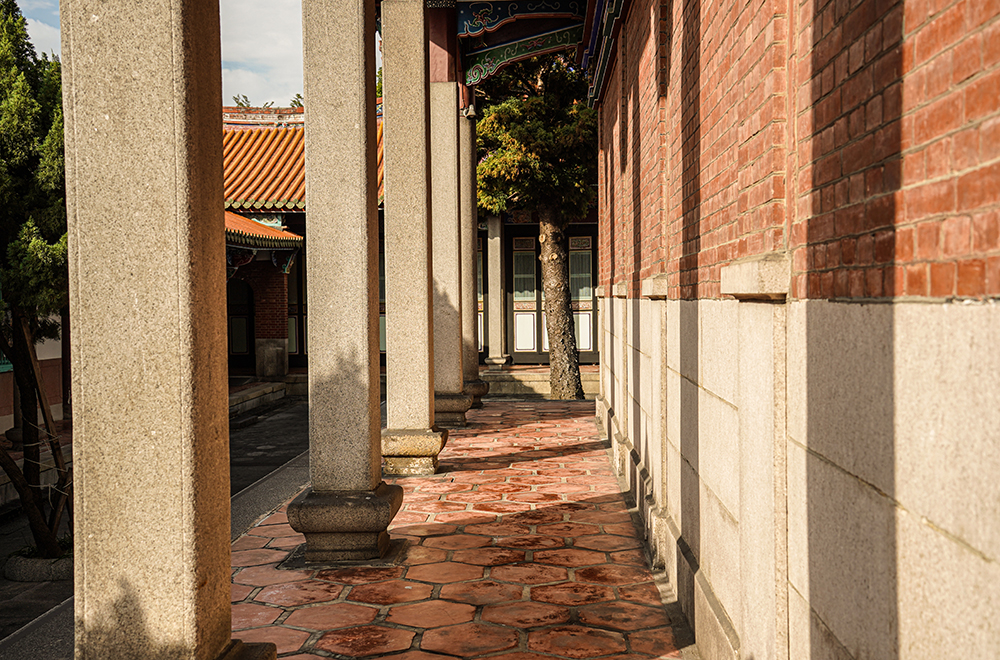
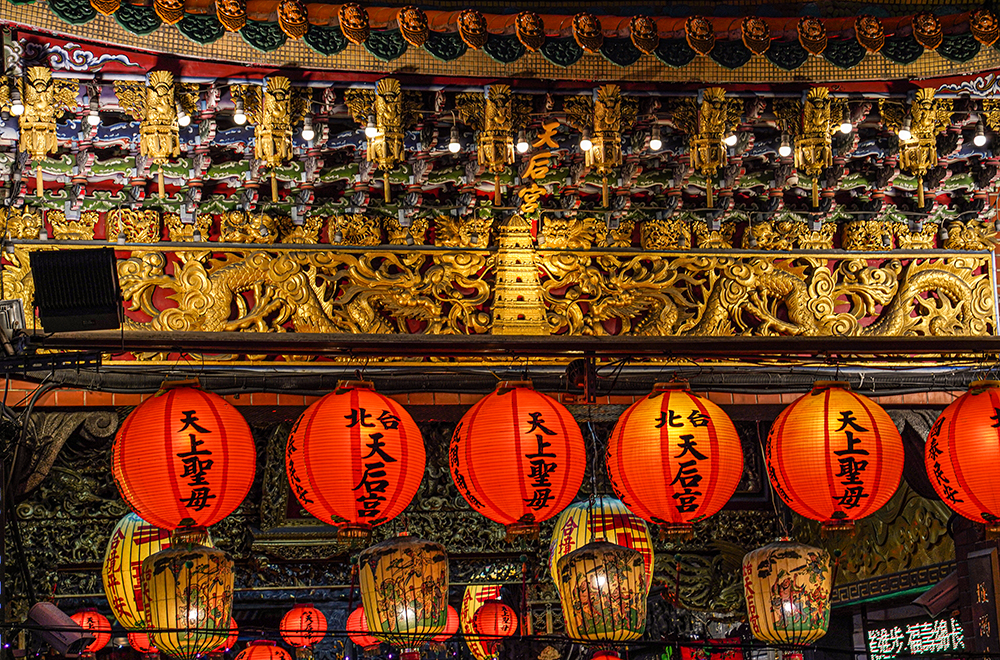
Tianhou Temple
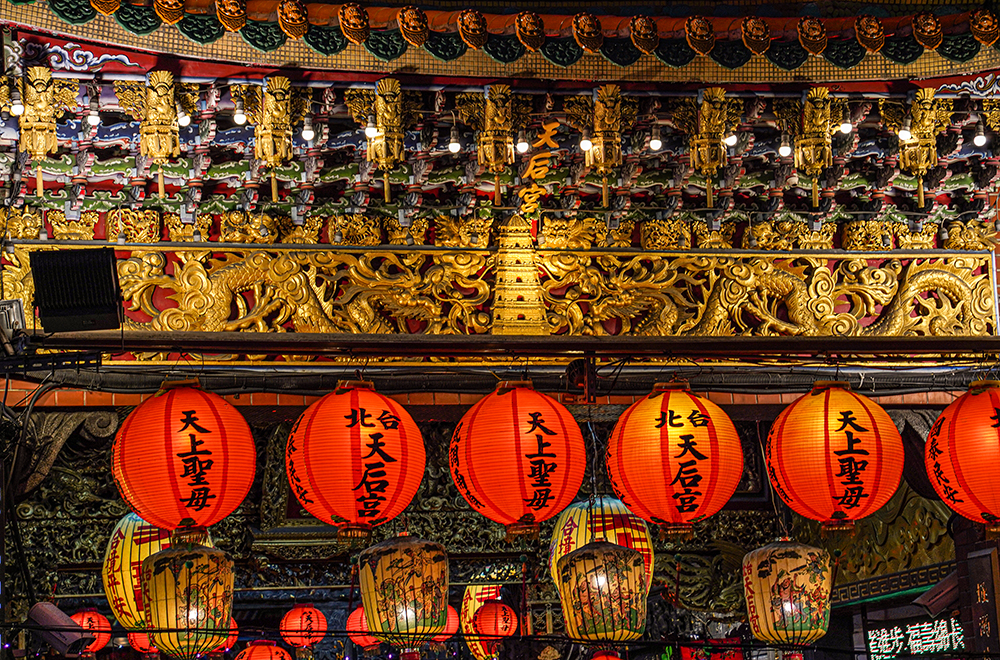
Tianhou Temple is dedicated to Mazu, the Heavenly Holy Mother, and traces its origins back to the Qianlong period of the Qing Dynasty, when it was known as “Mengjia Xinxing Temple.” Nestled within the lively Ximending shopping district, the temple offers a serene contrast to its urban surroundings, hidden amid residential buildings and exuding a unique charm.
Every year during Mazu’s birthday on the lunar calendar’s third month, the temple draws throngs of worshippers. During the annual Mengjia Grand Procession, the temple's Mazu joins the parade alongside Qingshan Temple, creating a vibrant spectacle and enriching the temple's cultural narrative.
Inside the temple, multiple deities are enshrined, reflecting the pluralistic nature of Taiwanese folk beliefs. As commerce in the surrounding area has flourished, Tianhou Temple has become a silent witness to the city's growth and local life, offering visitors a heartfelt connection to Taipei’s history, culture, and community spirit.
Every year during Mazu’s birthday on the lunar calendar’s third month, the temple draws throngs of worshippers. During the annual Mengjia Grand Procession, the temple's Mazu joins the parade alongside Qingshan Temple, creating a vibrant spectacle and enriching the temple's cultural narrative.
Inside the temple, multiple deities are enshrined, reflecting the pluralistic nature of Taiwanese folk beliefs. As commerce in the surrounding area has flourished, Tianhou Temple has become a silent witness to the city's growth and local life, offering visitors a heartfelt connection to Taipei’s history, culture, and community spirit.
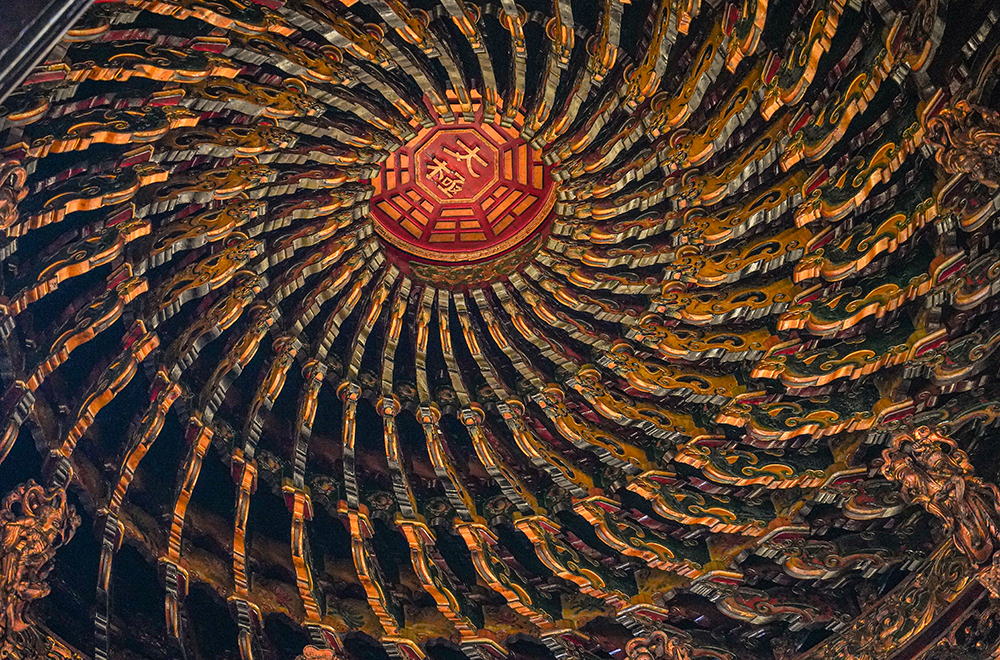 The coffered ceiling uses interlocking brackets without a single nail, showcasing masterful craftsmanship.
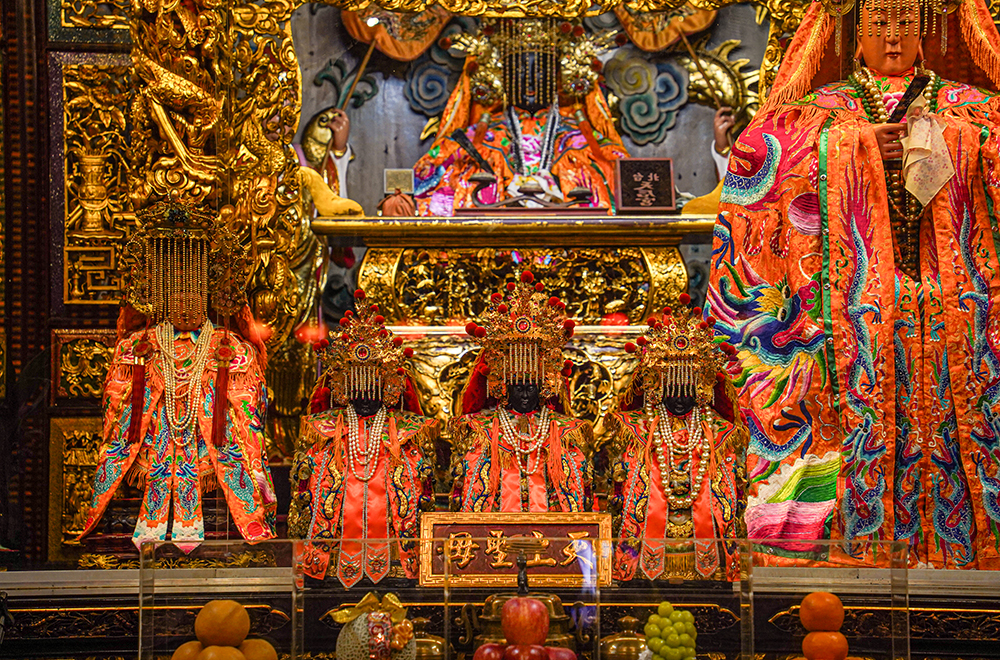 The main hall of Tianhou Temple enshrines Mazu, the Heavenly Holy Mother.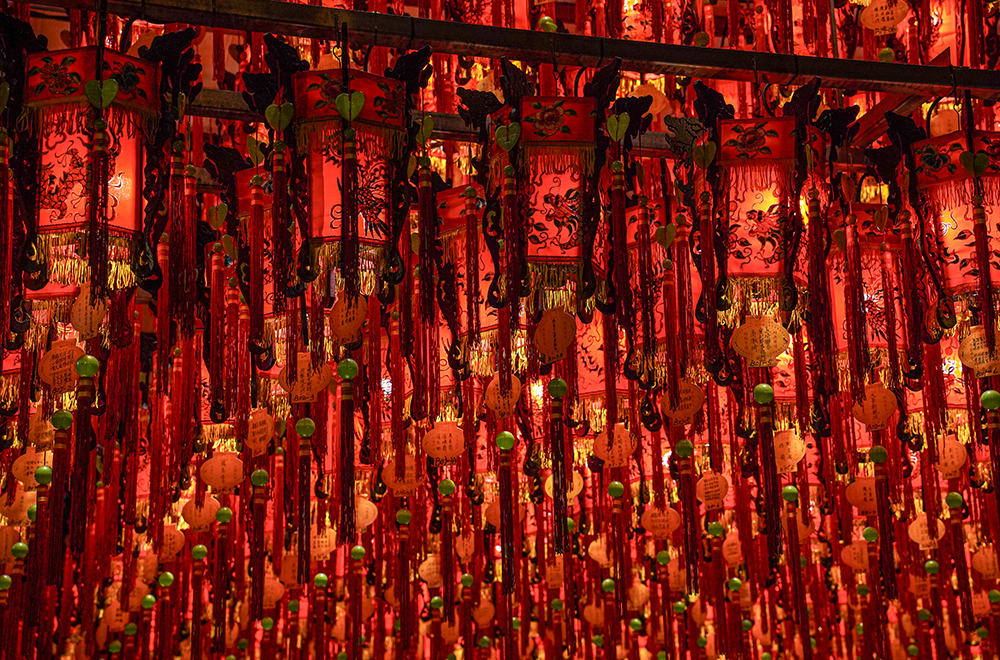
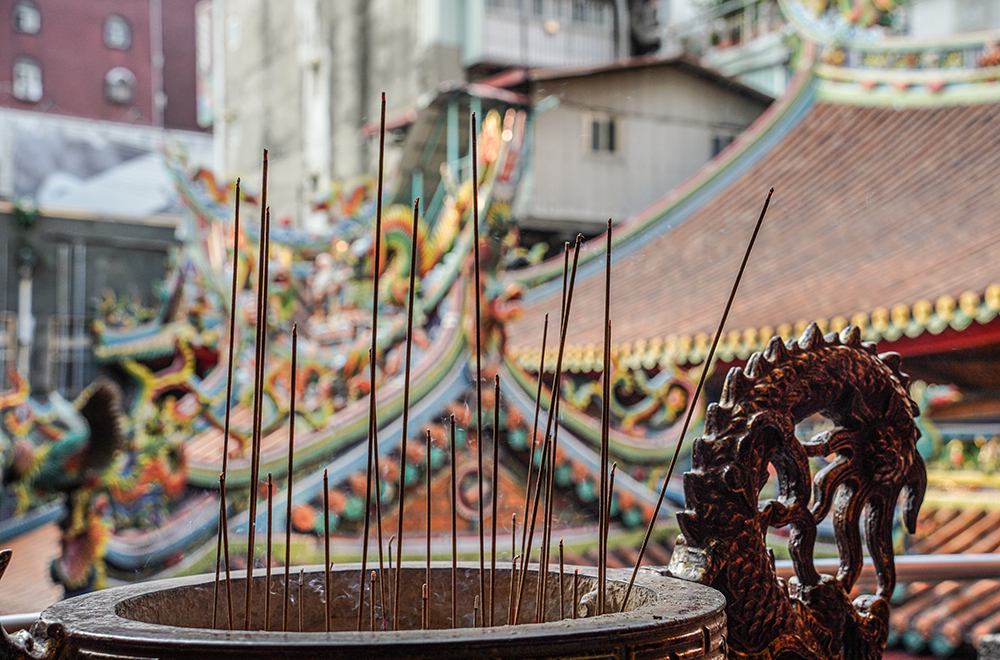 The bustling Tianhou Temple is filled with incense smoke from dawn to dusk.
Monga Qingshan Temple
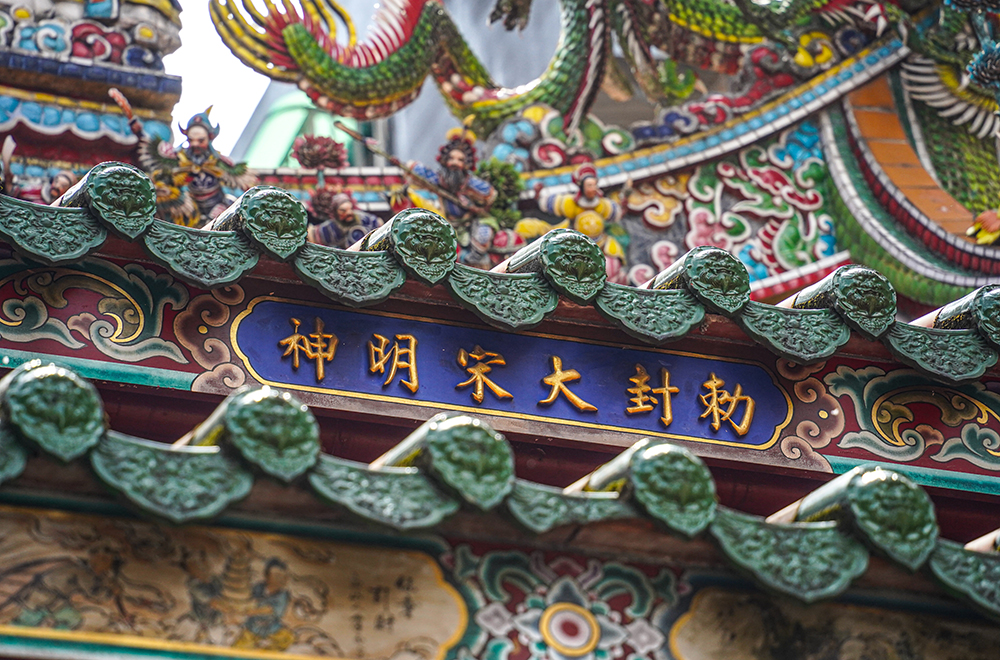 During the Song Dynasty, King Qingshan was honored by the emperor with the title "Great Divine Spirit of the Song Dynasty."
Qingshan Temple is dedicated to Ling’an Zunwang (King Qingshan), a deity believed to have the power to dispel evil and safeguard the community. According to tradition, on the 23rd day of the 10th lunar month—King Qingshan’s birthday—the deity leads his divine generals in a patrol through the streets and alleys of Mengjia (Wanhua), blessing the area with peace and protection. This custom continues today in the form of the annual “King Qingshan’s Night Patrol and Pilgrimage,” a vibrant and iconic festival that begins with the booming chants of the Eight Generals. The lively procession draws crowds from all over and has been recognized as a Taipei City Intangible Cultural Heritage event.
Architecturally, Qingshan Temple has been designated a Taipei City Historic Monument, a testament to its ornate carvings, intricate structure, and timeless elegance. The temple stands in what was once a bustling commercial hub, symbolizing the prosperity of bygone days. Today, it remains not only a major center of local faith but also a cultural landmark that strengthens community bonds and preserves cherished traditions in the Wanhua neighborhood.
Architecturally, Qingshan Temple has been designated a Taipei City Historic Monument, a testament to its ornate carvings, intricate structure, and timeless elegance. The temple stands in what was once a bustling commercial hub, symbolizing the prosperity of bygone days. Today, it remains not only a major center of local faith but also a cultural landmark that strengthens community bonds and preserves cherished traditions in the Wanhua neighborhood.
Surrounding attractions Events Facebook
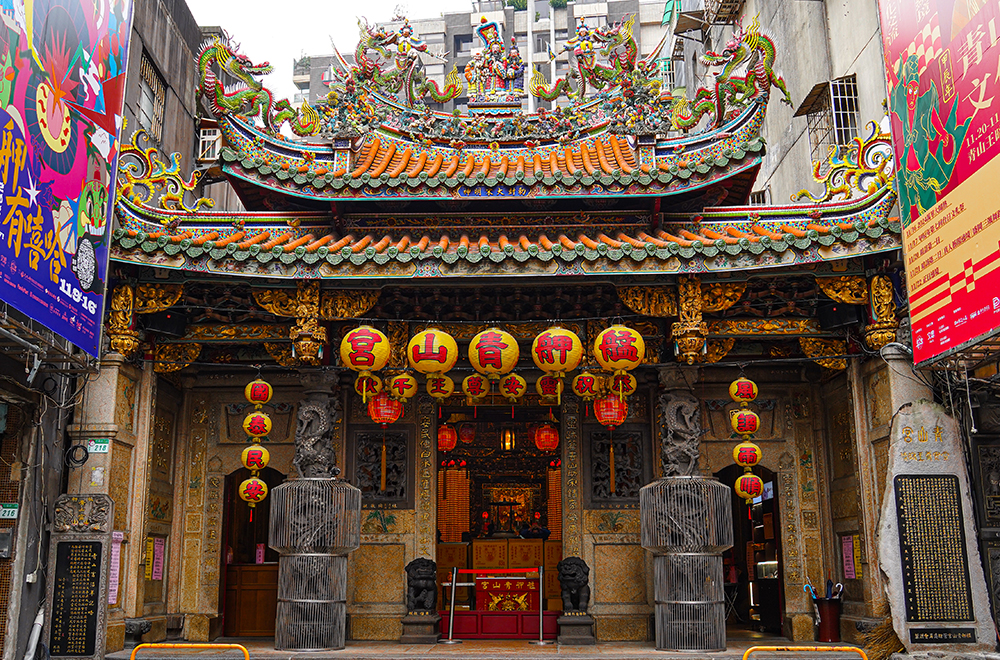 The architecture of Qingshan Temple has been designated a Taipei City historic monument.
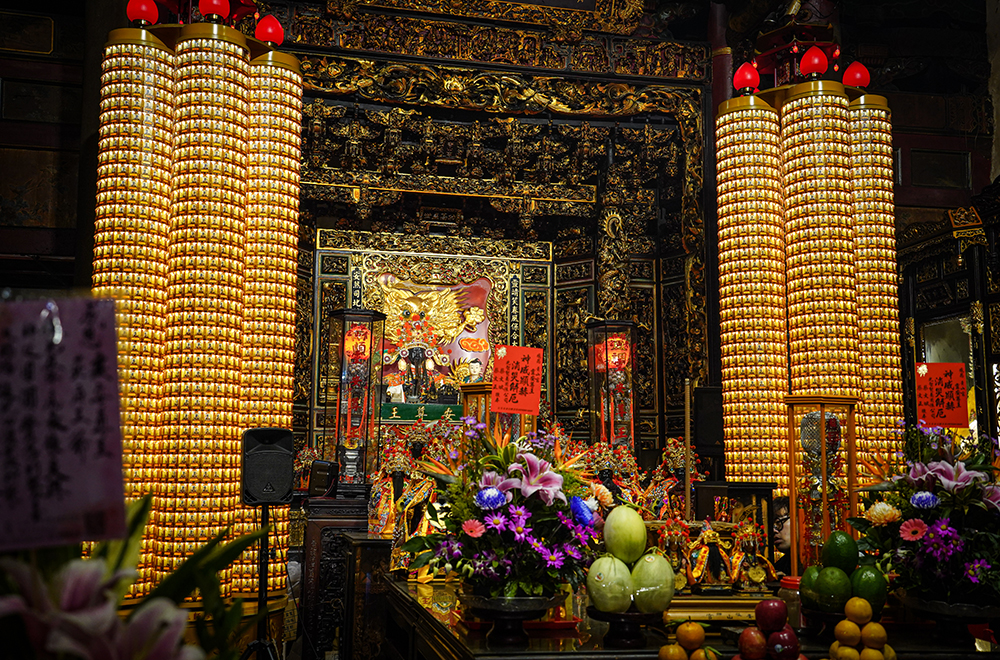 The main hall enshrines Ling’an Zunwang, also known as King Qingshan.
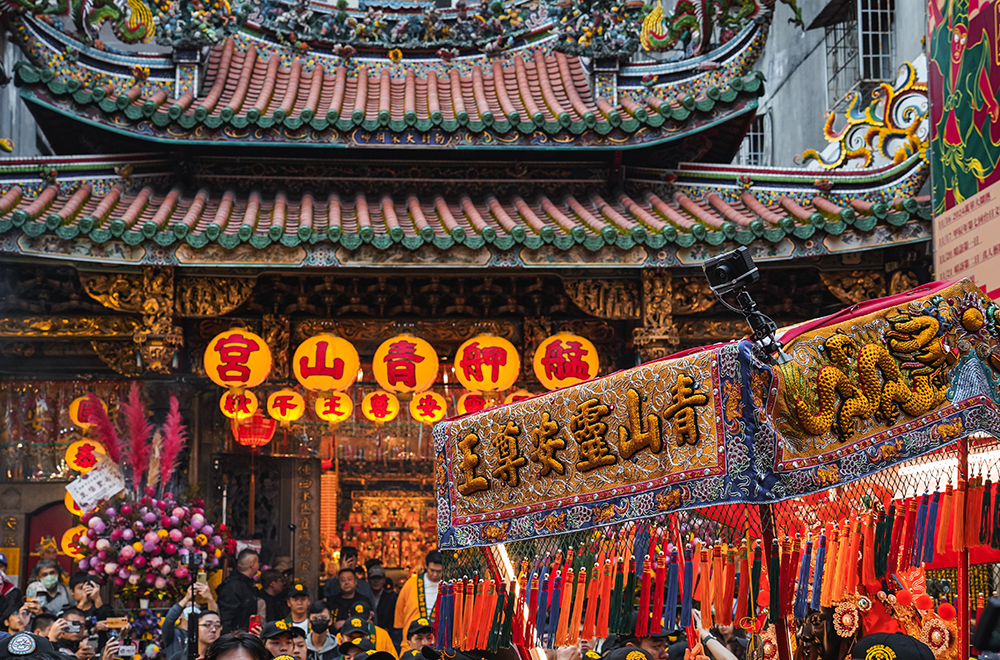 The Night Patrol and Pilgrimage of Bangka Qingshan Temple is designated as an intangible cultural heritage of Taipei City.
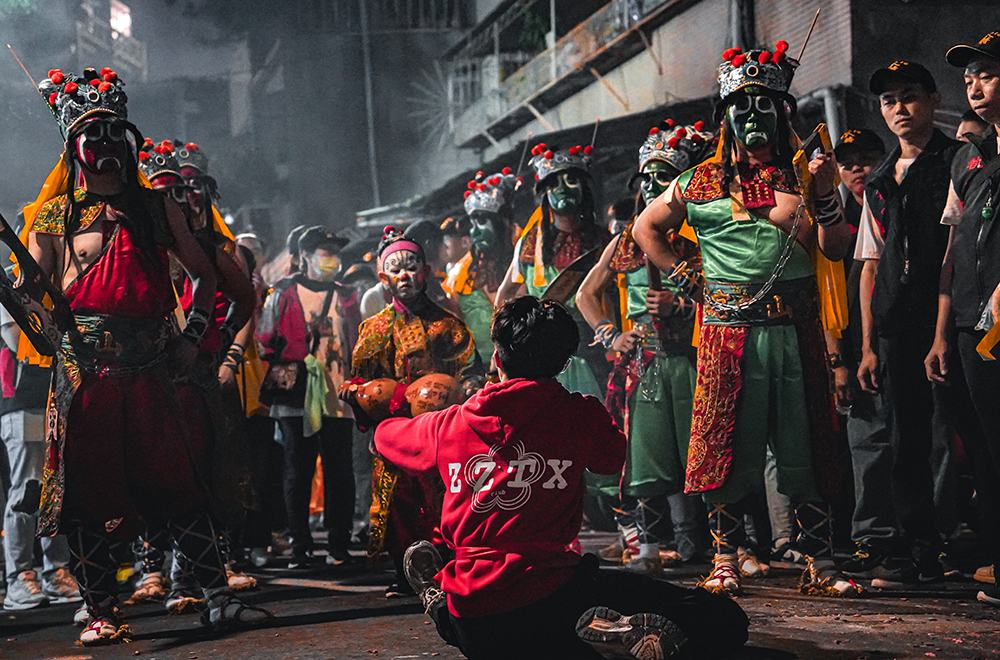 The Eight Generals lead as the vanguard in Qingshan Temple’s annual Night Patrol and Pilgrimage procession.
Bangka Qingshui Temple
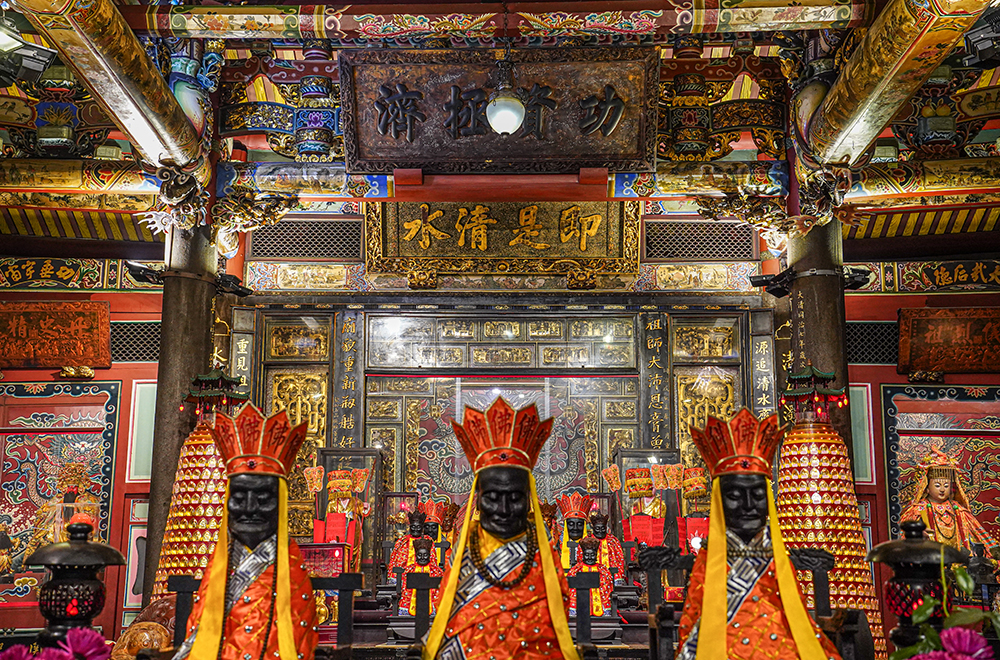
Bangka Qingshui Temple, also known as Qingshui Zushi Temple, is dedicated to Master Qingshui—a revered deity in Taiwanese folk religion. He is affectionately referred to by locals as Zushi Gong (Grand Master), Black-Faced Master, Penglai Master, or Drooping-Nose Master. Symbolizing the spirit of alleviating misfortune and delivering all beings, Qingshui Zushi stands as a spiritual stronghold in the community. The temple is deeply woven into everyday life, linking traditional belief with grassroots culture, and continues to draw visitors eager to experience the charm of old Taipei.
The temple is historically significant, having witnessed the “Dingxiajiao Conflict,” a major factional rivalry in early Taipei, and marks the shifting of important urban areas during the Qing Dynasty. Since then, it has stood as a testament to Mengjia’s former commercial prosperity and cultural vibrancy. The temple preserves numerous plaques and stone inscriptions, reflecting the historical social landscape. Its sweeping swallowtail roof ridges and finely carved wood and stone details embody the beauty of traditional Taiwanese artistry and serve as a living legacy of local heritage.
The temple is historically significant, having witnessed the “Dingxiajiao Conflict,” a major factional rivalry in early Taipei, and marks the shifting of important urban areas during the Qing Dynasty. Since then, it has stood as a testament to Mengjia’s former commercial prosperity and cultural vibrancy. The temple preserves numerous plaques and stone inscriptions, reflecting the historical social landscape. Its sweeping swallowtail roof ridges and finely carved wood and stone details embody the beauty of traditional Taiwanese artistry and serve as a living legacy of local heritage.
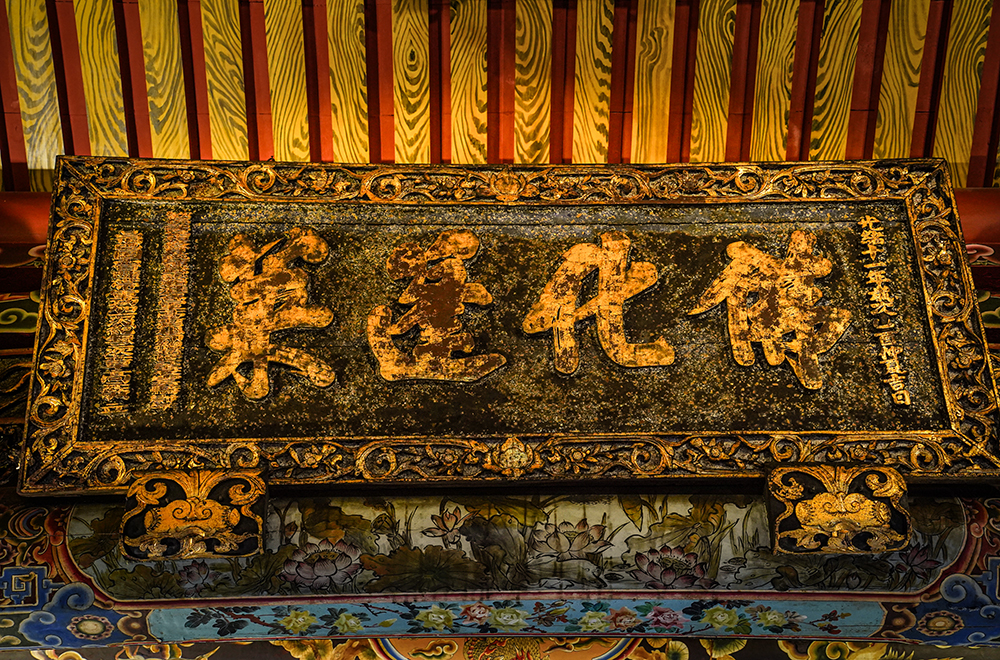 During the Guangxu era, General Zhang Gaoyuan of Taiwan Garrison presented the plaque inscribed with “Buddhism Enlightens Penglai.”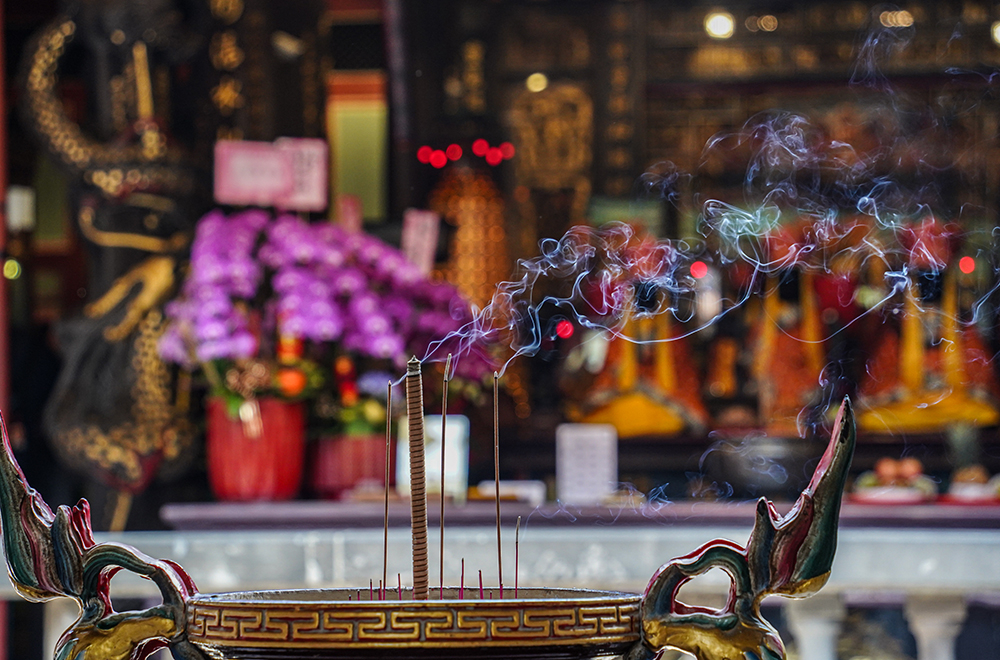
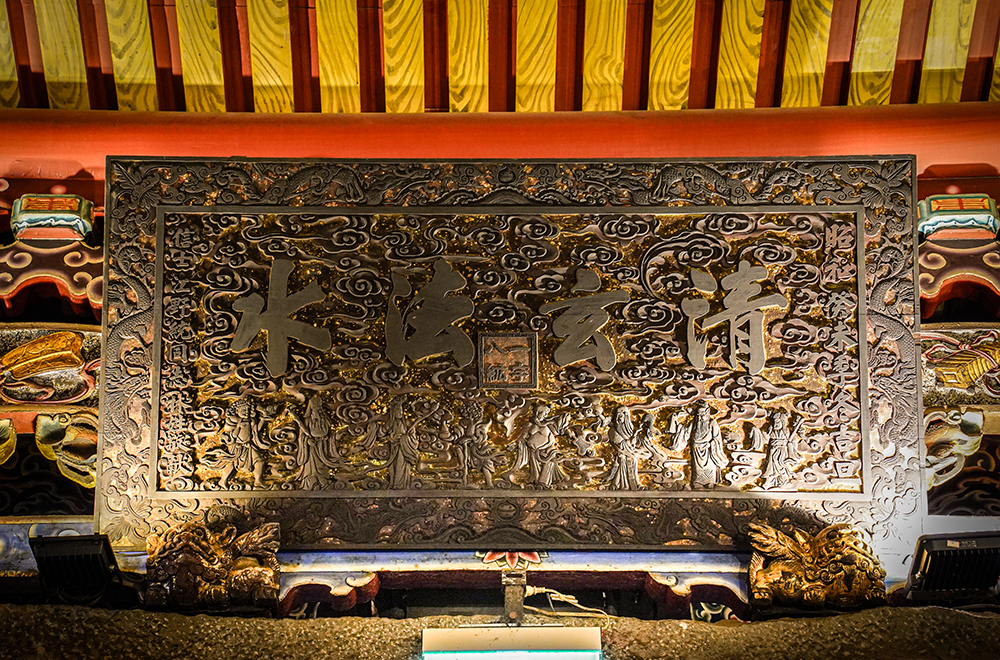 An old plaque inscribed with “Qingshui Faxuan.”
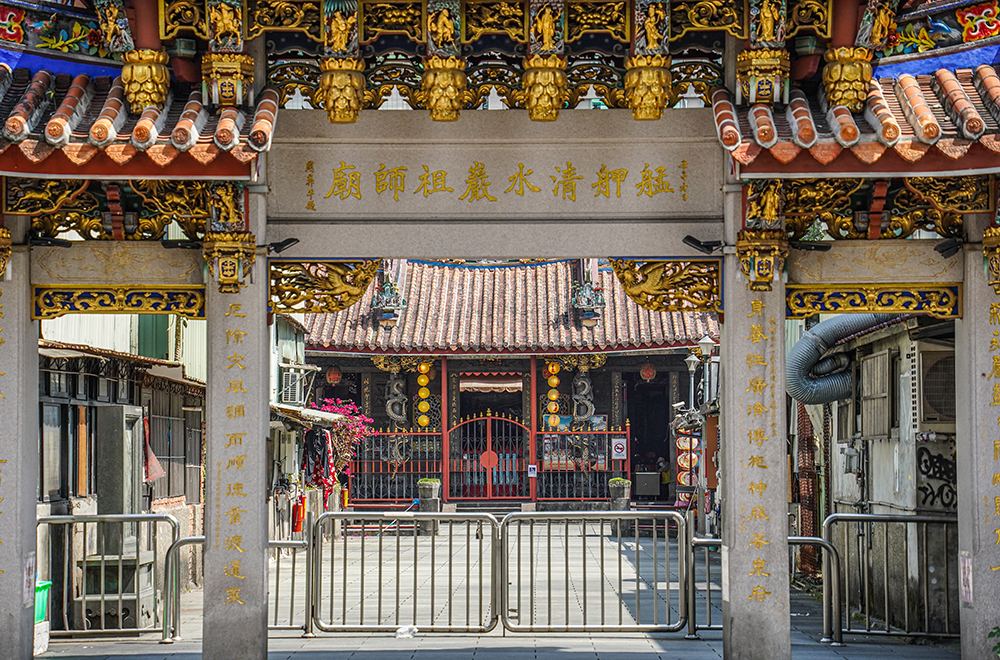 Located in Wanhua, Qingshui Temple serves as a guardian for the people of Bangka.
Longshan Temple
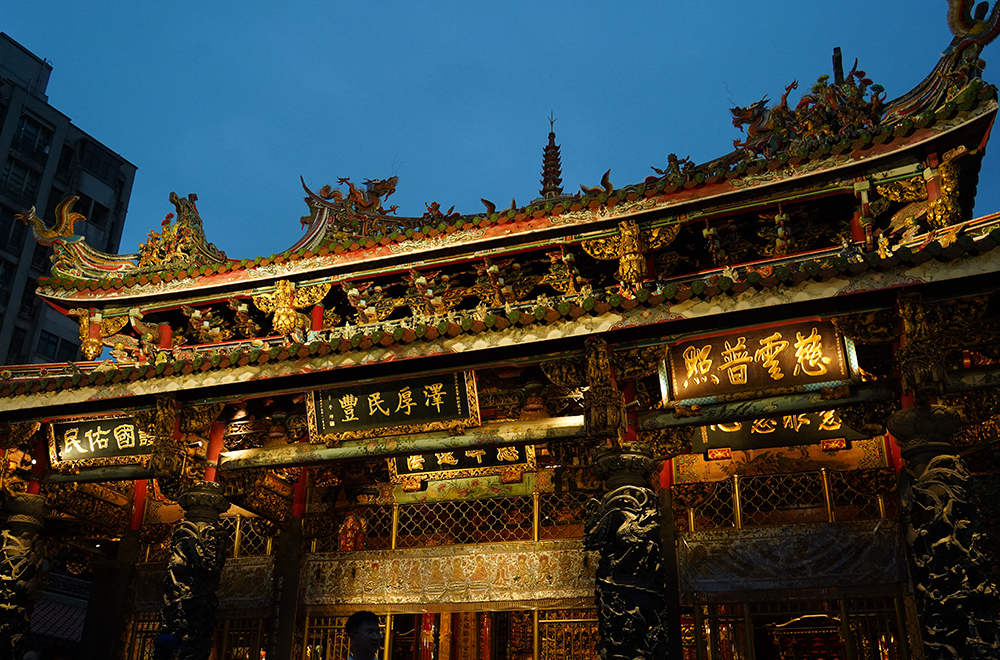 The main hall of Longshan Temple, including its timberwork, dragon columns, and stone carvings, was all crafted by master artisans of the era.
Longshan Temple, dedicated to Guanyin Bodhisattva, is one of the most iconic and beloved temples in Taipei. A steady flow of international tourists visits daily, while local worshippers arrive punctually each day to chant sutras, offer prayers, and seek blessings—particularly from Yue Lao, the god of love and marriage. These vibrant scenes embody the spiritual and cultural essence of Longshan Temple.
The temple’s annual Ghost Festival (Zhongyuan Pudu) is a Taipei City-designated intangible cultural heritage event. The ceremonies reflect historical connections, including tributes to spirits from the "Shulan Huajiao" incident, the "Wuchuan Temple," and "Chezang Jiaoma." These rites commemorate the hardships of early settlers and honor the legacy of northern Taiwan’s pioneering communities.
Serving as a sanctuary of faith and emotion, Longshan Temple has witnessed the rise and transformation of the Wanhua area. From past to present, it continues to pulse with the region’s historical spirit and cultural warmth, making it a cornerstone of local identity and a treasured symbol of Taipei’s living heritage.
The temple’s annual Ghost Festival (Zhongyuan Pudu) is a Taipei City-designated intangible cultural heritage event. The ceremonies reflect historical connections, including tributes to spirits from the "Shulan Huajiao" incident, the "Wuchuan Temple," and "Chezang Jiaoma." These rites commemorate the hardships of early settlers and honor the legacy of northern Taiwan’s pioneering communities.
Serving as a sanctuary of faith and emotion, Longshan Temple has witnessed the rise and transformation of the Wanhua area. From past to present, it continues to pulse with the region’s historical spirit and cultural warmth, making it a cornerstone of local identity and a treasured symbol of Taipei’s living heritage.
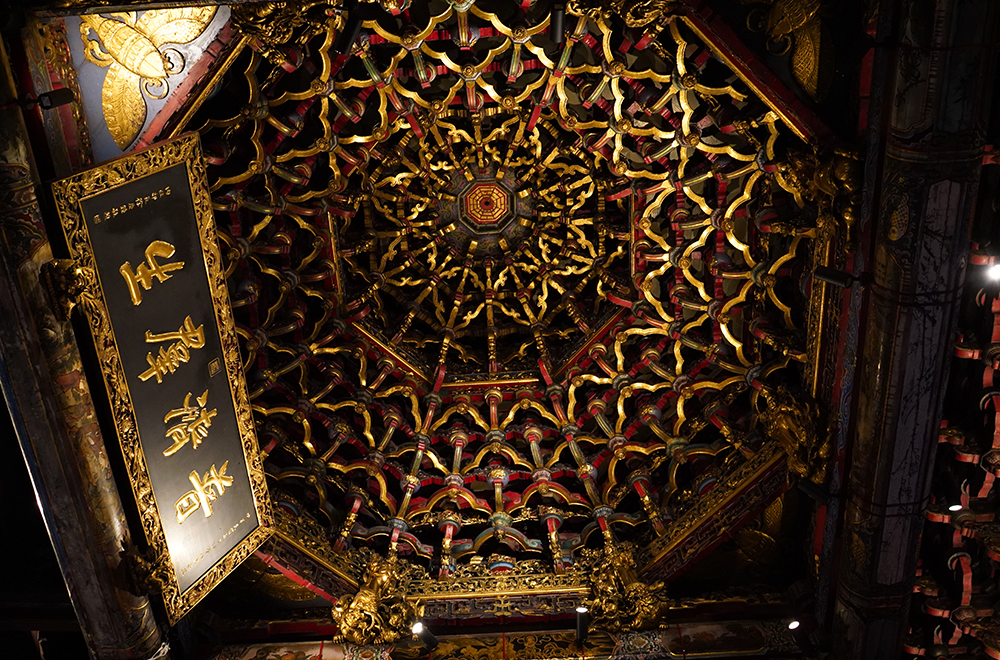 The coffered ceiling is supported by lion pedestals, creating a majestic and sacred atmosphere.
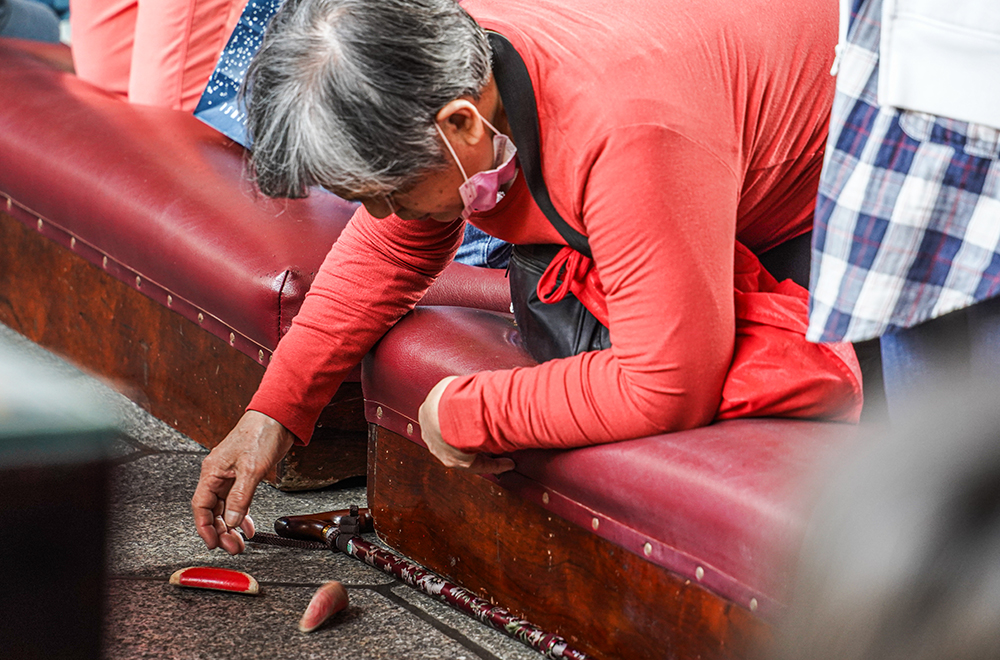 Worshippers constantly crowd in front of Longshan Temple’s altar, tossing divination blocks to seek guidance.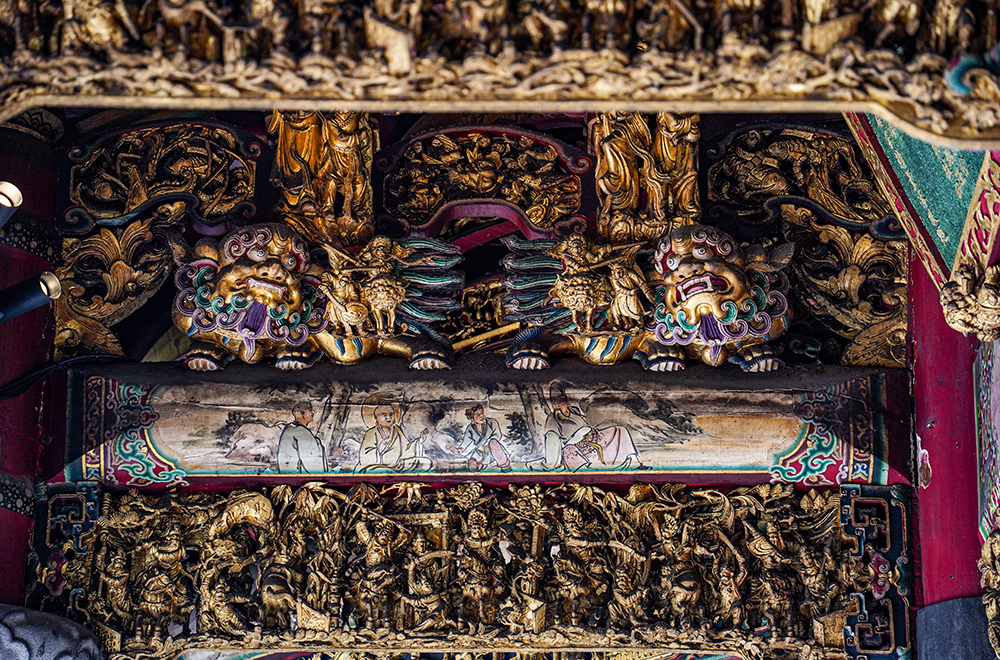
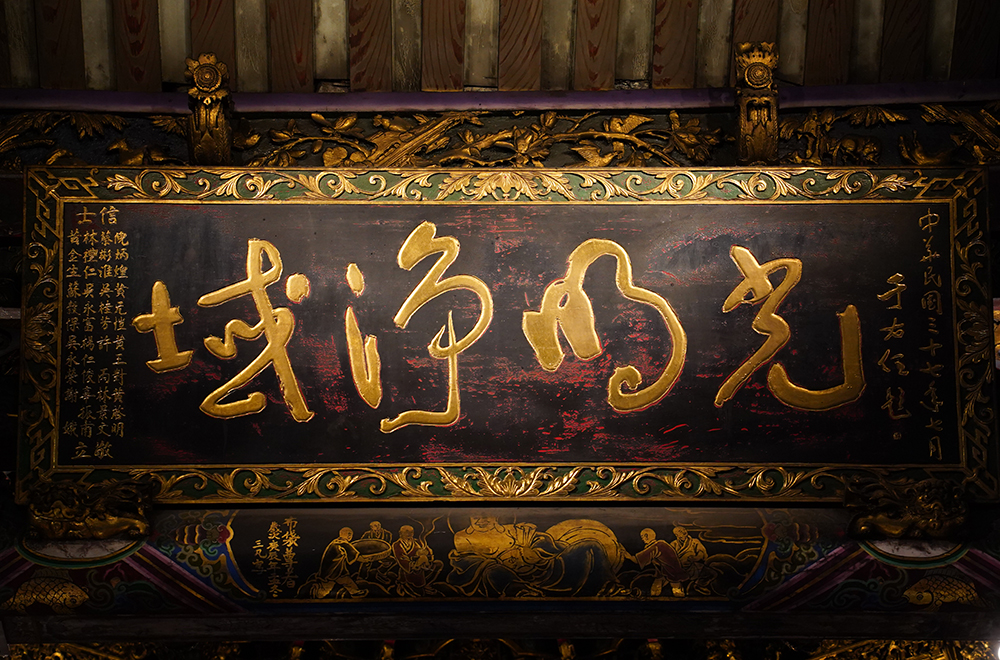 The calligraphy “Realm of Radiant Purity” by renowned calligrapher Yu Youren signifies the boundless illumination of the Buddha’s light, reaching all without obstruction.